

21 living room ideas that start with the sofa: what size fits your room, layouts for real UK homes, colour schemes that work, and what it all costs.
Homeflair showroom team · Updated October 2026 · 14 minute read
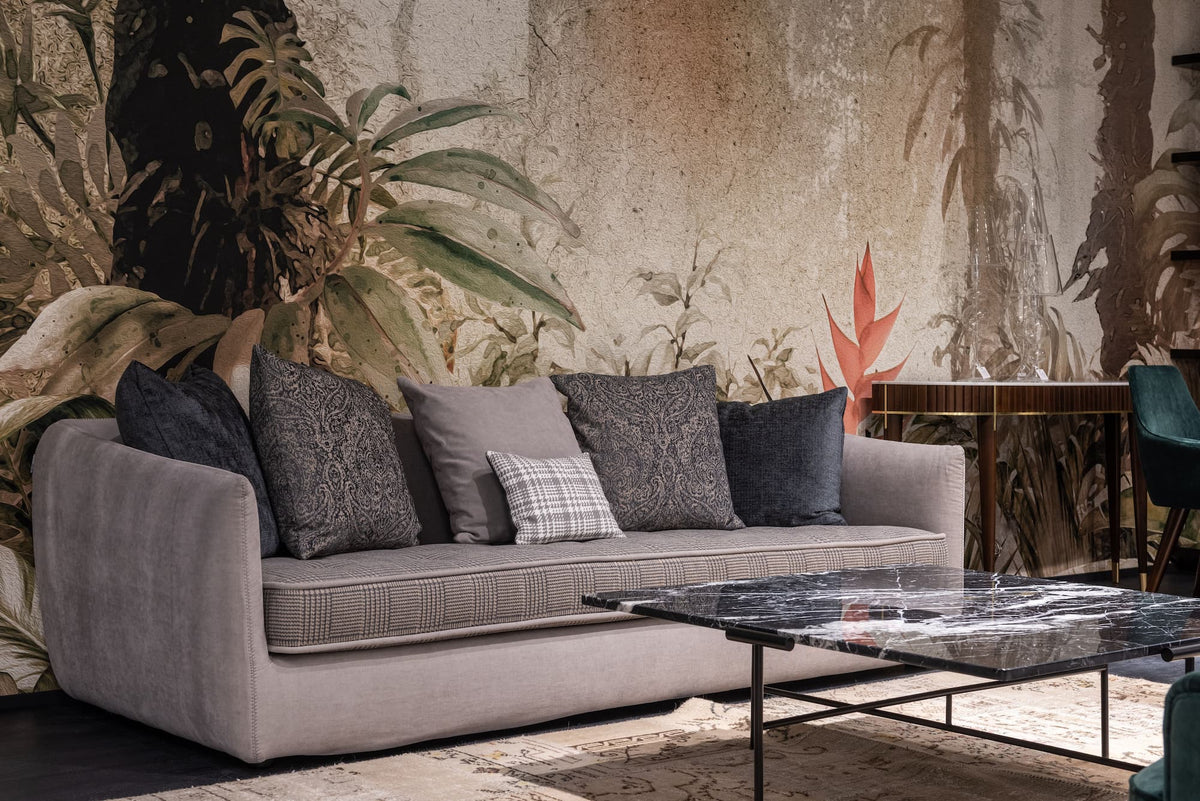
Search for living room ideas and you get hundreds of beautiful photos: a velvet sofa in a room twice the size of yours, styled by a team who will never have to live with it. Pretty, but not much help when your lounge is 3.5 metres wide, has a radiator under the window and needs to seat four people on a Friday night.
This guide works the other way round. We have sold sofas from the same Rotherham showroom since 1972, and every week we help people plan real British living rooms around the one piece that matters most: the sofa. So every idea below comes with the measurements, the colours that actually work with it, and the sofas from our own floor that make it happen. If you want the buying basics first, start with our sofa buying guides.
The ideas at a glance
Start with the sofa: it is the biggest thing in the room and the hardest to change, so choose it before paint and cushions.
Size it to the wall: aim for a sofa about two-thirds the length of the wall it sits on.
Keep 75 to 90 cm walkways and 40 to 45 cm between the sofa and coffee table.
Colour: grey loves warm whites and rust, brown loves sage and cream, cream loves layered textures.
Small rooms: raised legs, slim arms and a 2 seater plus a chair beat a squeezed-in corner sofa.
Cosy: three light sources, a rug the front legs sit on, and seats deep enough to curl up in.
Trends worth buying into: warm browns, soft curves and deep seats. Keep the walls easy to change.
Living room ideas by room size
Most living room galleries skip the most important question: how much sofa does your room actually take? Use this as a starting point, measuring the wall the sofa will sit against and the depth of the room in front of it.
| Room width | Typical UK room | Sofa that fits best | Layout idea |
|---|---|---|---|
| Under 3 m | Terraced front room, new-build lounge | 2 seater (150 to 180 cm) or snuggler | 2 seater + accent chair, wall-mounted TV |
| 3 to 4 m | Most semis and newer homes | 3 seater (190 to 215 cm) or compact 1 corner 2 | 3 seater + chair, or a small corner tucked into the far wall |
| 4 to 5 m | Larger semis, knocked-through rooms | 3 + 2 seater, or 2 corner 2 | Sofas in an L around the rug and coffee table |
| Over 5 m / open plan | Extended and open-plan spaces | Large corner, U shape or two 3 seaters | Float the sofa to create a living zone |
Depth matters as much as width. Most sofas are 85 to 100 cm deep, but deep-seat styles like the Buoyant Cancun are 106 cm, and a recliner needs extra room in front when it opens. Measure from the wall to where you walk, not just wall to wall. Our Will It Fit guide also covers doors, stairs and tight hallways.
1. Choose the sofa before the paint
Paint costs a weekend to change. A good sofa should last ten years or more. Pick the sofa first, in a colour you will still like in five years, then build the walls, rug and cushions around it. It is the opposite of what most of us do, and it is the single biggest reason rooms come together.
2. Size the sofa to the wall, not the room
A sofa roughly two-thirds the length of its wall looks right and leaves space for a side table or lamp at each end. A 4 metre wall suits a sofa of around 2.4 to 2.7 metres, which is a large 3 seater or a 2 corner 2. Go wall to wall and the room feels crammed even if everything technically fits.
3. Protect your walkways
Leave 75 to 90 cm for the main route through the room, and 40 to 45 cm between the sofa and the coffee table so you can reach a mug without stretching but still walk past. If the numbers do not work, drop the coffee table for nesting tables or a footstool with a tray.
Layout ideas for real UK homes
Big-brand galleries are full of square, open rooms. British living rooms come with bay windows, chimney breasts, through-lounges and a radiator exactly where the sofa wants to go. These layouts are the ones we sketch most often for customers.
4. The through-lounge: make two rooms out of one
In a knocked-through Victorian or Edwardian terrace, float the sofa with its back to the dining end so it divides the room. A low console or bookcase behind it finishes the zone. Keep the TV and fireplace end for relaxing, and the window end for dining or reading.
5. The 1930s bay window
Do not push the sofa into the bay. Put the sofa facing the bay (or facing the fireplace with its back to the door) and use the bay for an accent chair, a reading lamp and plants. You keep the light and the view, and the sofa sits on a straight wall where it belongs.
6. Fireplace and TV on different walls
If the chimney breast and TV point in different directions, use an L-shaped layout: a corner sofa, or a 3 seater facing the TV with a 2 seater or chair angled towards the fire. Our corner sofa buying guide explains left-hand versus right-hand facing so you order the right one.
7. Facing sofas for conversation
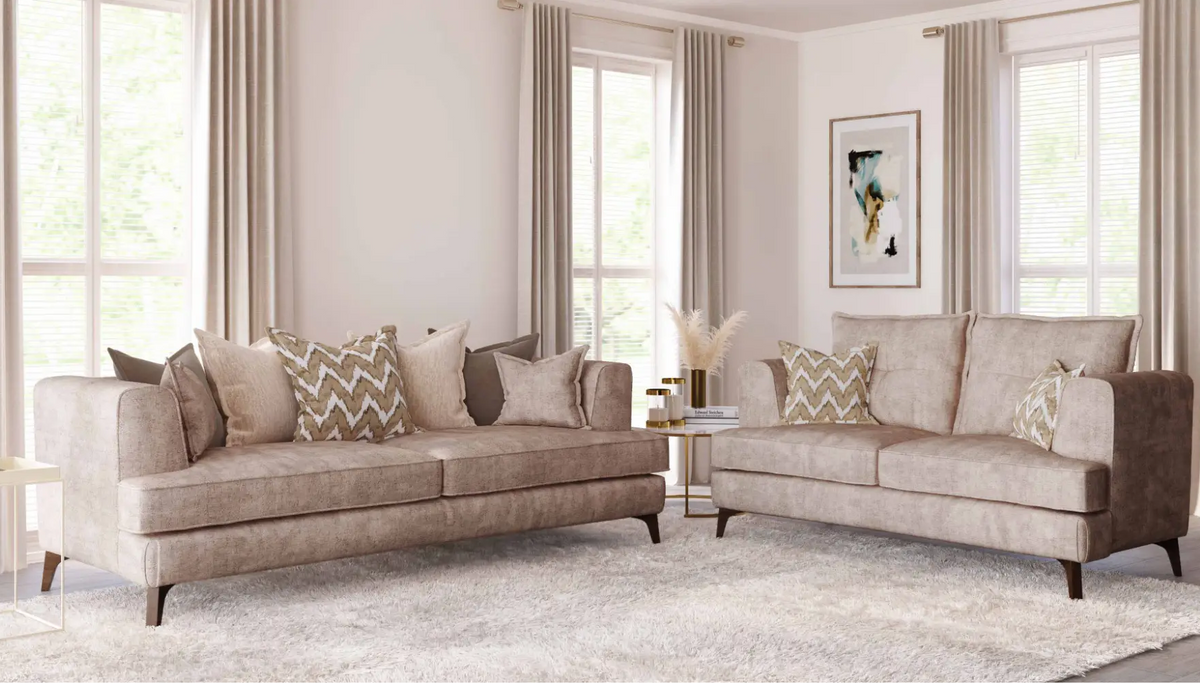
Two matching sofas facing each other across a coffee table is the classic layout for rooms where the fire, not the TV, is the focal point. You need roughly 2.5 to 3 metres between the sofa backs for it to work comfortably.
8. Open plan: float the sofa
In an open-plan kitchen-living space, pull the sofa away from the walls and anchor it on a large rug. The back of the sofa becomes the edge of the living area. Choose a sofa that looks finished from behind, which most British-made ranges do.
Colour ideas built around your sofa
Paint brands sell you a wall colour. We would rather start with the sofa you are keeping and tell you what works with it. Searches for brown living rooms, and brown and cream schemes, have been rising across the UK, while grey remains the most popular sofa colour we sell.
9. Grey sofa living room ideas
Grey is forgiving, but it can look flat and cold, especially in a north-facing room. The fix is warmth: warm white or soft putty walls instead of icy grey, wood tones in the coffee table or floor, and accent colours with some heat in them.
Pair a grey sofa with: warm white or mushroom walls, oak or walnut, rust, mustard, terracotta or blush cushions, and a textured rug.
Browse our grey sofas, from fabric 3 seaters to grey recliners and grey corner sofas.
10. Brown sofa living room ideas
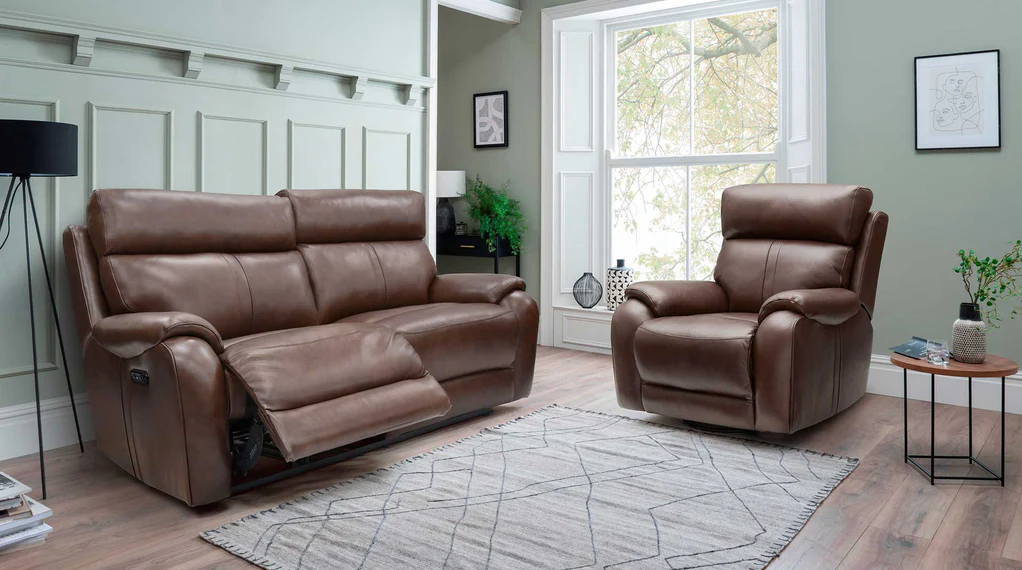
Brown is back, and it is the easiest sofa colour to make look expensive. Tan and chestnut leather, chocolate fabric and caramel tones all suit the warmer schemes people are choosing now, and they hide everyday wear far better than pale colours.
Pair a brown sofa with: sage or olive walls, cream and ivory, navy, brass and black metal, and cushions in burnt orange, ochre or deep red.
For a brown and cream living room, keep the walls and rug cream and let the sofa be the only dark, solid colour. See our brown and tan sofas and brown leather sofas.
11. Cream and beige sofa living room ideas
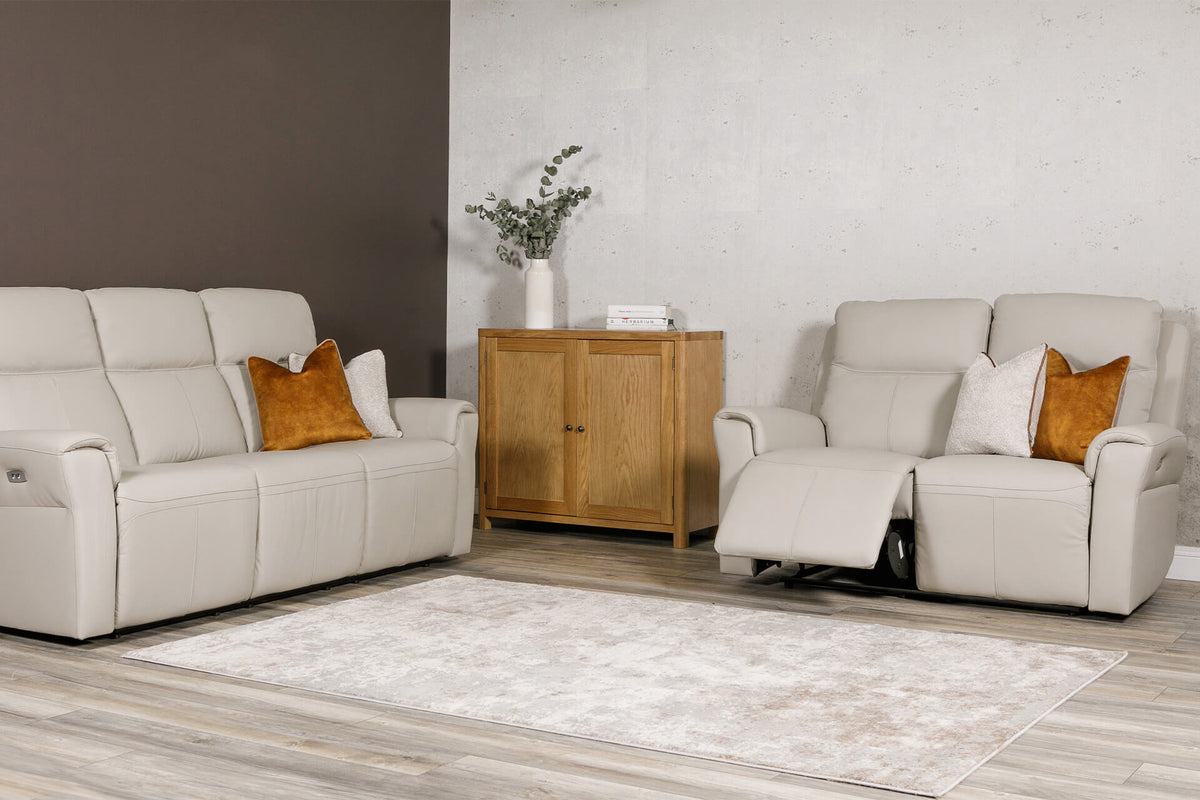
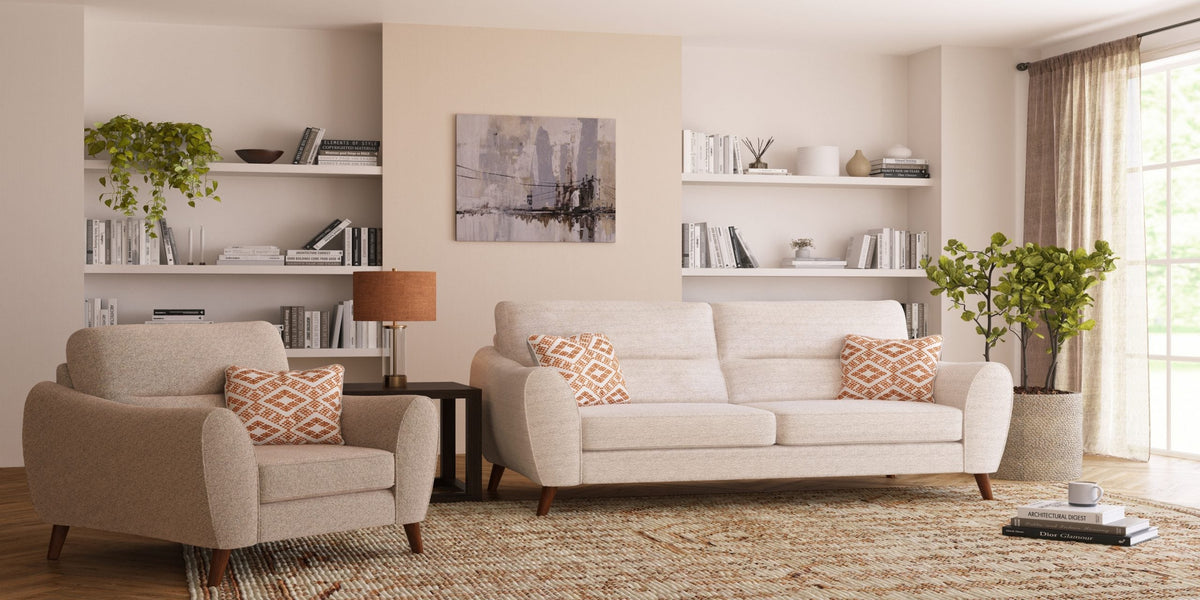
A cream sofa makes a small room feel bigger and lighter. The trick is layering: three or four shades of cream, oatmeal and stone with different textures, so the room feels calm rather than bland. Add one accent colour, usually rust, olive or black, and repeat it at least three times.
Pair a cream sofa with: warm white walls, oatmeal or jute rugs, light oak, linen curtains, and rust, olive or charcoal accents.
Worried about cream with kids or a dog?
Choose leather, which wipes clean, or a fabric with an easy-clean finish. Our lifestyle fabrics guide explains which fabrics cope with spills and pets. Shop cream and beige sofas.
12. Green sofa living room ideas
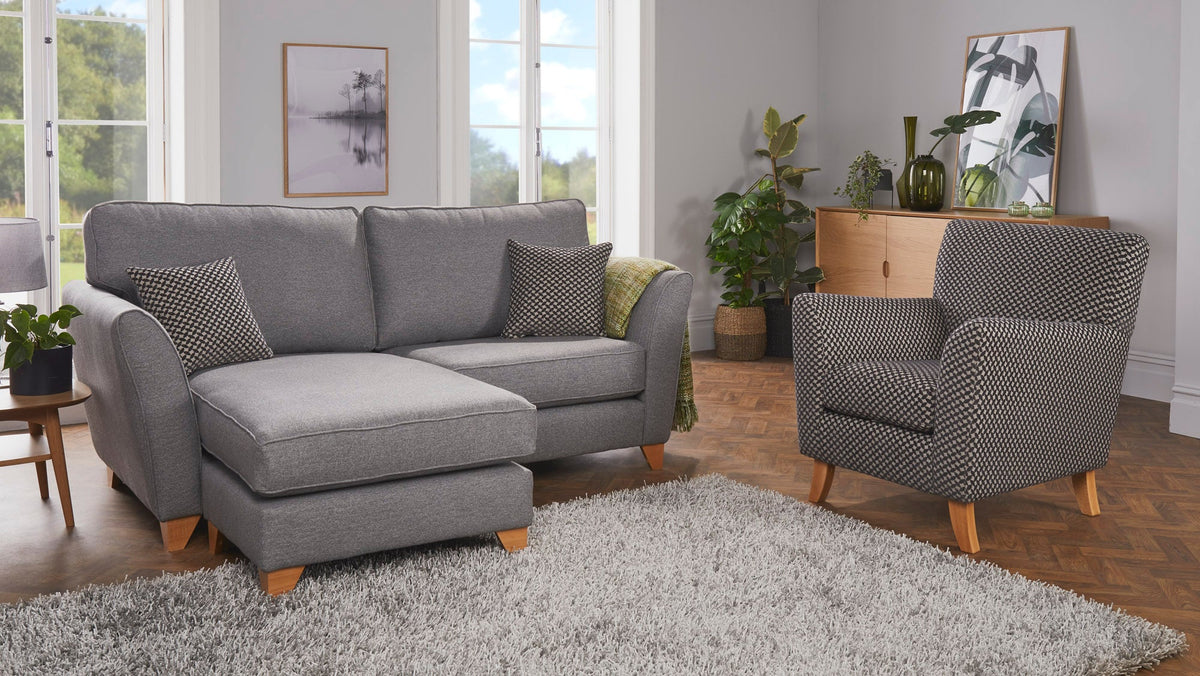
Green sofas have been one of the steadiest rising searches in the UK. Sage and olive are the easy ones to live with; forest and bottle green make a statement. If you are not sure, start by bringing green in through plants, cushions or the wall colour behind a neutral sofa. Ready to commit? Browse our green sofas, including the Juniper button back in sage.
Pair a green sofa with: warm white or blush walls, natural wood, brass, and burgundy, mustard or pink accents.
13. Blue sofa living room ideas
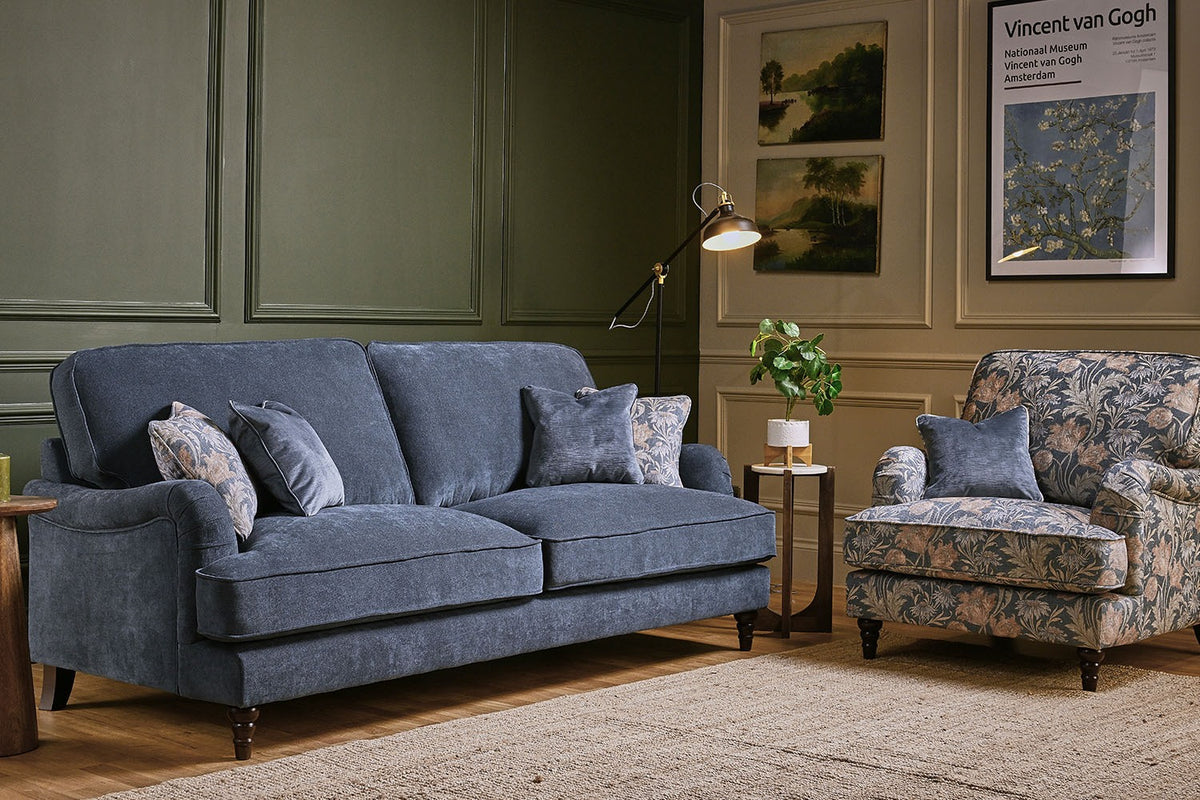
Navy and denim blue sit happily in most British homes, and they work with both modern and traditional rooms. Keep walls light, add warm wood, and use mustard, ochre or coral for contrast. See our blue sofas.
14. Black and dark leather sofa ideas
A black or charcoal leather sofa can feel heavy in a small room. Balance it with warm white walls, a big textured rug, wood and plenty of soft cushions and throws. In a larger room, go the other way and lean into a moody scheme with dark walls and brass lamps. Browse our genuine leather sofas.
Small living room ideas
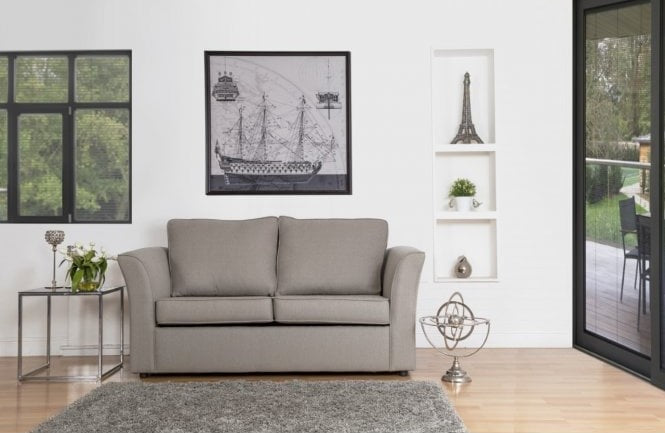
Ideal Home lists 58 small living room ideas, most of them about paint and accessories. In our experience, small rooms are won or lost on the sofa you choose. These are the rules we give customers with compact lounges.
15. Show the floor
Sofas on raised legs with slim arms look lighter than block-based styles with chunky arms, even at the same width. Seeing floor under the sofa makes a small room look bigger, and arm width alone can cost you 20 to 30 cm of seat.
16. A 2 seater and a chair beat a squeezed-in corner
A corner sofa in a small room often blocks a doorway or a radiator. A 2 seater plus an accent chair or swivel chair seats the same people, and you can move them around. See our 2 seater sofas.
17. Make the room work twice
If the lounge doubles as a guest room, a sofa bed means no compromise on everyday comfort. Modern mechanisms are a long way from the old folding bars; read our sofa bed buying guide before you choose.
Cosy living room ideas
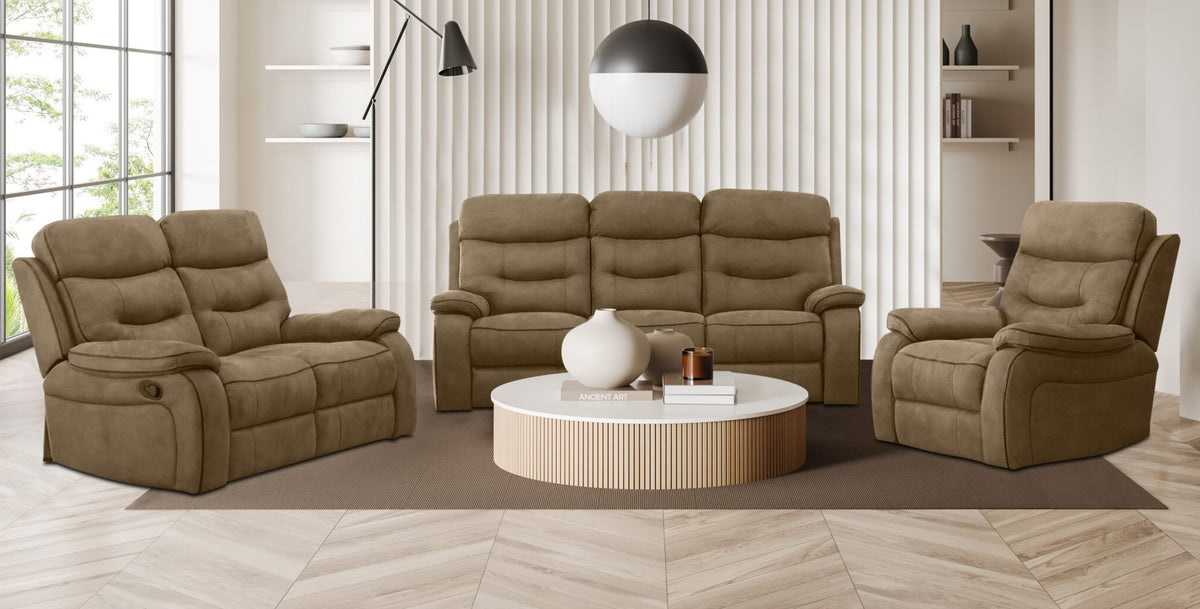
18. Layer three kinds of light
Most UK living rooms rely on a single ceiling light, which flattens everything. Add a floor lamp by the sofa for reading, a table lamp or two at low level, and something soft like a candle or LED strip on a shelf. With three light sources at different heights, the room feels cosy on a dark January evening.
19. Get the rug size right
A rug that is too small is the most common styling mistake we see. The front legs of the sofa and every chair should sit on it, with roughly 20 to 45 cm of floor showing around the edges of the room. For most 3 seater layouts that means at least 160 x 230 cm, and 200 x 290 cm for a corner sofa.
20. Recliners that do not look like recliners
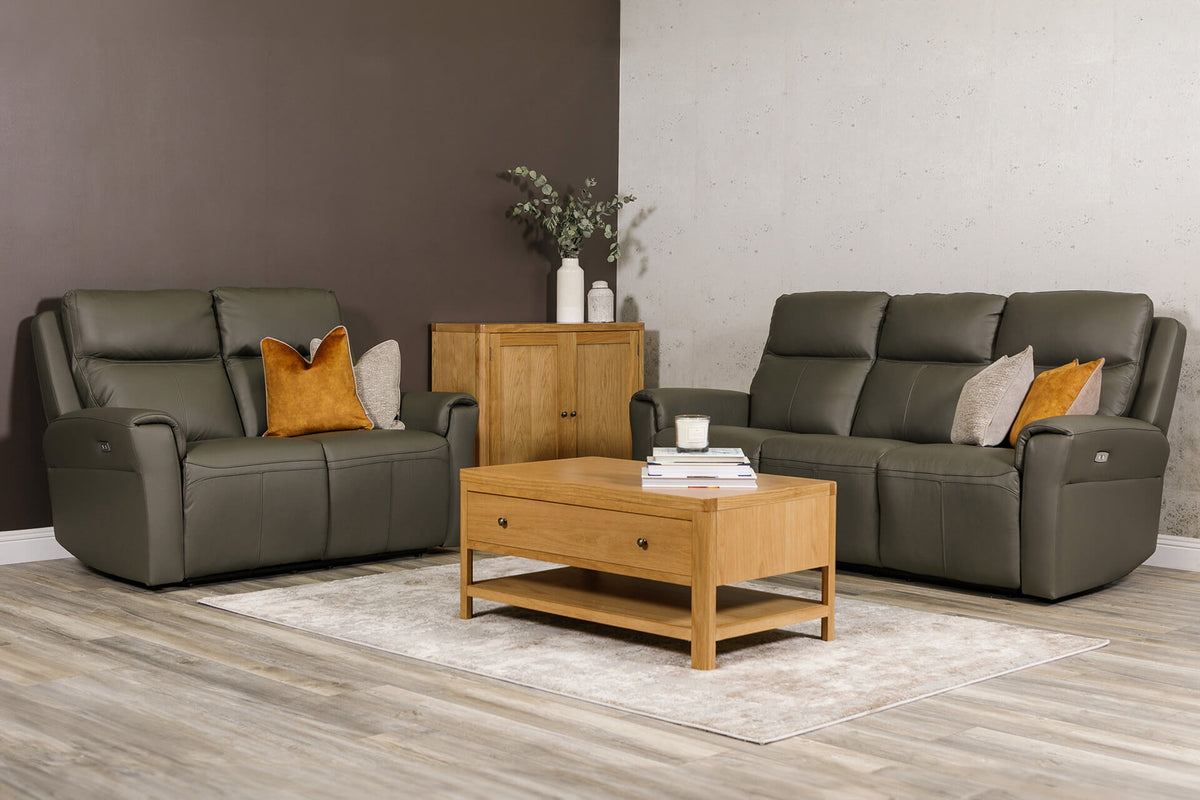
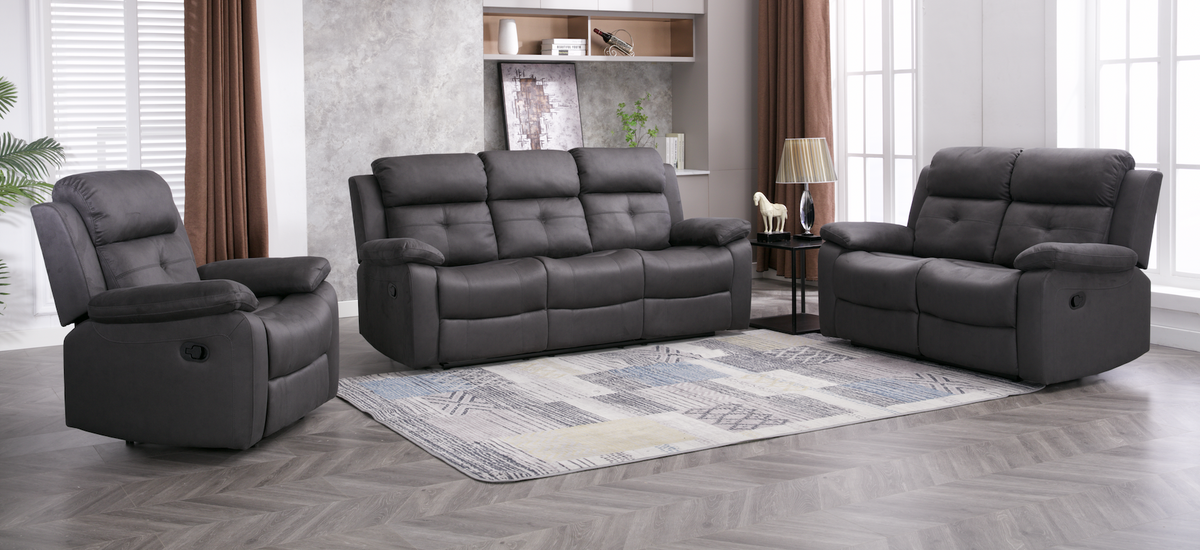
British buyers love a recliner, and design magazines rarely show them. Choose a recliner with a slim profile and fabric or leather that matches the rest of the room, like the Gabrielle above or the York in slate grey or chestnut. Two practical checks: leave the wall gap the maker specifies so the back can recline, and plan a plug socket behind any electric recliner. Our recliner sofa buying guide covers manual versus electric.
Living room ideas for families and pets
Real living rooms have muddy dogs, toddlers with yoghurt and teenagers who sit on the arms. Plan for it and the room will still look good in five years.
Fabric choice beats colour choice. A mid-tone fabric with an easy-clean finish hides more than a dark colour in a delicate weave.
Leather wipes clean and suits pet owners whose dogs are trained off the sofa; claws can mark it.
Removable or reversible cushions spread wear and make cleaning easier.
Avoid loose-weave and looped fabrics like some bouclés if you have cats.
Rounded coffee tables and footstools with soft tops are kinder to small heads.
Read our lifestyle fabrics guide for the fabrics we recommend to families.
Living room trends that will last
Trends move fast, sofas should not. These are the directions we see in UK searches and on our own showroom floor that are worth buying into, because they will still look right in five years.
21. Warm colours, soft curves, deep seats
Warm browns and creams are replacing cool grey as the base of many schemes. Searches for brown sofas and brown and cream living rooms are both rising.
Curved arms and rounded backs soften a room and suit both traditional and modern homes.
Deep, sink-in seats (the "cloud" look) are in demand. Check seat depth: 55 cm and above feels relaxed, but shorter people may want a cushion behind them.
Bouclé and textured fabrics add interest to plain colours. Choose them for a chair or footstool if you have pets.
Burgundy and deep red accents are rising. Use them in cushions, throws and art, not the sofa, unless you are sure.
Our rule for trends
Put the trend in the things that cost under £100 to change: cushions, throws, lampshades and paint. Keep the sofa in a colour and shape you love on its own.
What each living room idea costs
Galleries rarely tell you the price of anything. Here is a realistic guide, using sofas we sell and typical high-street prices for accessories.
| Upgrade | Typical cost | Impact |
|---|---|---|
| New cushions and a throw | £40 to £150 | Changes the colour scheme in an afternoon |
| Floor lamp and table lamp | £60 to £250 | The quickest way to make a room cosy |
| Rug (160 x 230 cm or larger) | £100 to £400 | Pulls a layout together and adds warmth |
| Paint for one room (DIY) | £60 to £150 | Sets the mood around your sofa |
| Ex-display sofa | Varies, often well below the original price | Big upgrade for less: see current ex-display sofas |
| Recliner 3 seater, e.g. Gabrielle manual | £988 | Comfort and a smart high-back look |
| British-made 3 seater, e.g. Buoyant Miller | £1,088 | Made to order in your choice of fabric |
| Electric recliner 3 seater, e.g. Russo leather | £1,088 | Leather, power recline and USB charging |
Sofa prices are the prices shown on our site at the time of writing and can vary by fabric and size. For a full breakdown of what each price band gets you, read how much to spend on a sofa.
Measure before you buy: the 6 numbers that matter
Wall length where the sofa will sit (aim for a sofa about two-thirds of it).
Room depth from that wall to your main walkway, minus 75 to 90 cm for walking.
Sofa depth, and for recliners the depth when fully reclined plus the wall gap.
Doorways and hallways on the way in: width, height and any tight turns.
Radiators, sockets and windows along the wall.
TV distance: roughly 1.5 to 2.5 times the screen size, so about 2 to 3.5 m for a 55 inch TV.
Not sure? WhatsApp us a photo of your room with the measurements and we will suggest sofas that fit, or use our Will It Fit guide.
Living room FAQs
How do I choose the right sofa size for my living room?
Measure the wall the sofa will sit against and aim for a sofa about two-thirds of that length, then check you still have 75 to 90 cm for walkways. As a rough guide, rooms under 3 m wide suit a 2 seater, 3 to 4 m a 3 seater or compact corner, and over 4 m a 3 + 2 or larger corner.
What colour walls go with a grey sofa?
Warm whites, mushroom, putty and soft sage all work with grey. Avoid very cool blue-greys in north-facing rooms, and add warmth with wood, rust, mustard or terracotta accents.
What colours go with a brown sofa?
Brown works with sage and olive green, cream and ivory, navy, and warm accents like burnt orange and ochre. Brass or black metal lamps finish the look.
How can I make a small living room look bigger?
Choose a sofa on raised legs with slim arms, keep walls and rug light, use a large mirror opposite the window, and choose a 2 seater plus chair instead of a corner sofa that blocks doors or radiators.
How far should a sofa be from the TV?
A common guide is 1.5 to 2.5 times the screen size. For a 55 inch TV that is roughly 2 to 3.5 metres.
How big should a living room rug be?
Big enough for the front legs of the sofa and chairs to sit on it. For most 3 seater layouts that is at least 160 x 230 cm, and around 200 x 290 cm for a corner sofa.
Can I see these sofas before buying?
Yes. Our showroom at the Parkgate Complex, Rawmarsh Road, Rotherham S60 1RZ is open seven days a week, so you can sit on every range in this guide.
Plan your living room around the right sofa
Send us your room size and a photo, and we will suggest sofas, colours and a layout that fit.
Shop all sofasWhatsApp your room photo