

Over 80 percent of British households value unique furniture that stands the test of time. With so much emphasis on mass production today, it is easy to overlook the artistry and personal touch at the heart of handmade sofas. Understanding these differences empowers you to make better choices for comfort, style, and lasting value, especially when exploring what truly sets British craftsmanship apart.
Table of Contents
- Defining Handmade Sofas And Common Misconceptions
- Types Of Handmade Sofas: Materials And Styles
- Craftsmanship, Materials, And Personalisation Options
- Handmade Vs Mass-Produced: Quality And Value
- Cost, Longevity, And Environmental Impact
Key Takeaways
| Point | Details |
|---|---|
| Definition of Handmade Sofas | Handmade sofas are meticulously crafted pieces of furniture that prioritise quality, personalised design, and expert craftsmanship over mass production. |
| Common Misconceptions | Many assume handmade sofas come with limited options or high costs, but they often offer extensive customisation and flexible pricing. |
| Quality vs. Mass Production | Handmade sofas are built to last and maintain aesthetic appeal over time, offering better long-term value compared to mass-produced alternatives. |
| Sustainable Purchasing | Investing in handmade sofas supports environmentally conscious practices, as they are often made from locally sourced materials and crafted with minimal waste. |
Defining Handmade Sofas and Common Misconceptions
Handmade sofas represent more than just furniture - they are carefully crafted pieces of functional art meticulously created by skilled artisans. Unlike mass-produced alternatives, these sofas emerge from a precise process involving personalised design, premium materials, and expert craftsmanship. UK handmade furniture traditions demonstrate a commitment to quality that machine manufacturing simply cannot replicate.
Many consumers misunderstand what truly defines a handmade sofa. Contrary to popular belief, handmade does not merely mean something assembled manually. Instead, it signifies a holistic approach where each component is individually selected, cut, shaped, and assembled with exceptional attention to detail. This process involves skilled upholsterers who understand fabric tension, frame construction, and ergonomic design principles that transform a simple seating arrangement into a comfort masterpiece.
Common misconceptions about handmade sofas often revolve around perceived limitations. Some believe handcrafted furniture means limited design options or exorbitant pricing. However, sofa selection guides reveal that handmade sofas actually offer tremendous flexibility. Artisan manufacturers can adapt designs, materials, and configurations to match individual preferences, creating truly bespoke pieces that reflect personal style and functional requirements.
Pro Tip for Sofa Shoppers: When exploring handmade sofas, always request detailed information about the craftspeople, materials, and construction process. A genuine handmade piece will have transparent documentation about its creation, allowing you to understand and appreciate the skill behind your potential purchase.
Types of Handmade Sofas: Materials and Styles
Handmade sofas represent a rich tapestry of design possibilities, blending traditional craftsmanship with contemporary aesthetics. Sofa style guides reveal a fascinating spectrum of materials and design approaches that transform ordinary seating into extraordinary pieces of functional art. From classic wooden frames to innovative fabric selections, each handmade sofa tells a unique story of skill and creativity.
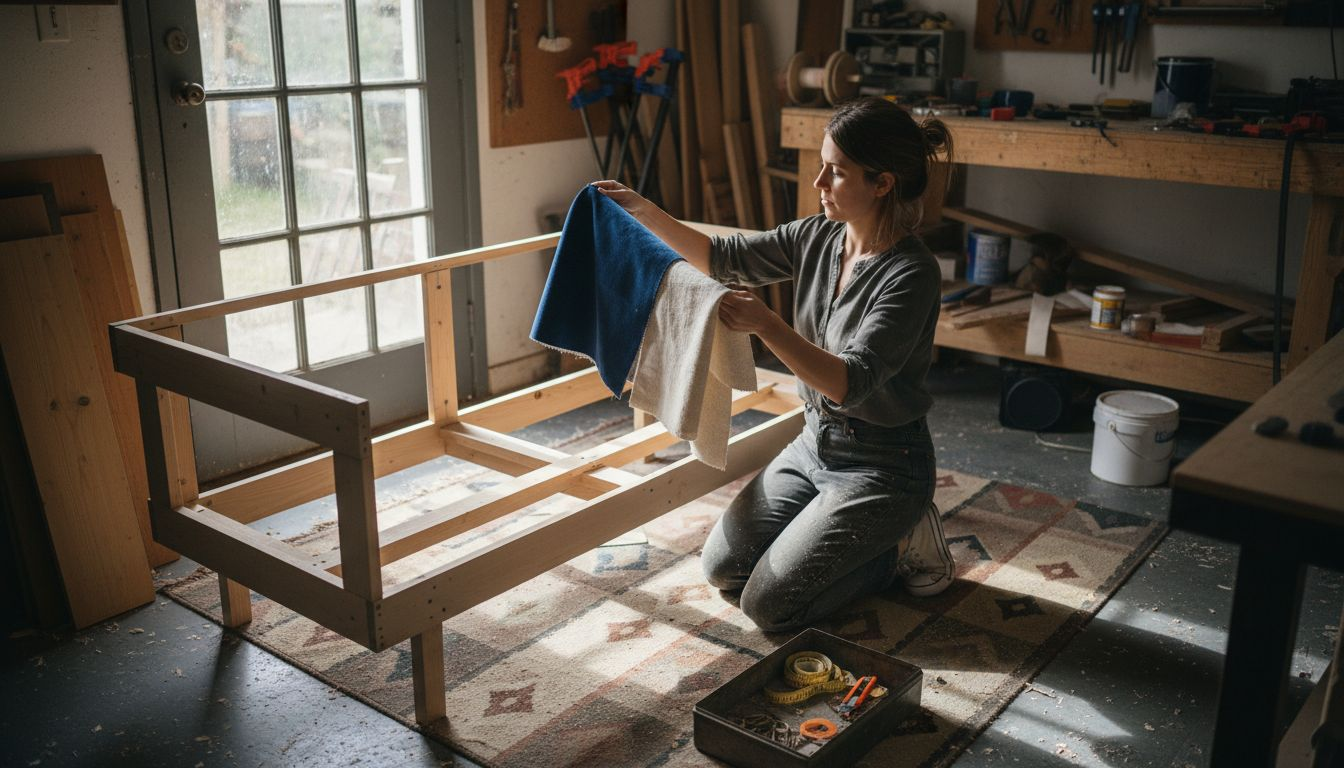
Wooden craftsmanship forms the foundation of many handmade sofas, with premium timber like teak, rosewood, and oak providing exceptional structural integrity. Each wood type brings distinct characteristics: teak offers natural water resistance, rosewood delivers rich colouration, and oak provides remarkable durability. Beyond structural considerations, artisan manufacturers carefully select wood grain patterns and finishes that complement specific interior design schemes, ensuring each piece feels both timeless and personalised.
Fabric selection represents another critical dimension in handmade sofa construction. High-quality textiles such as cotton, linen, and wool create diverse tactile experiences, with each material offering unique benefits. Cotton provides breathability, linen delivers elegant texture, and wool contributes natural temperature regulation. Expert upholsterers meticulously select and treat these fabrics, ensuring they withstand daily use while maintaining their aesthetic appeal. The result is a sofa that not only looks beautiful but also adapts seamlessly to different living environments.
Pro Tip for Textile Selection: When choosing a handmade sofa, request fabric samples and test them in your actual living space. Natural lighting and your existing decor will help you determine which material and colour truly harmonise with your home’s unique character.
Explore key materials and their unique benefits in handmade sofa construction:
| Material | Main Benefit | Common Usage |
|---|---|---|
| Teak | Water resistance, strength | Sofa frames, support beams |
| Rosewood | Rich colour, fine grain | Decorative accents, structure |
| Oak | Durability, timeless appeal | Main frame, visible surfaces |
| Cotton | Breathable, easy to clean | Upholstery, cushions |
| Linen | Cool touch, elegant look | Seat covers, backing fabric |
| Wool | Warmth, natural resilience | Upholstery, decorative trims |
Craftsmanship, Materials, and Personalisation Options
Handmade sofas transcend standard furniture by offering unprecedented levels of personalisation and craftsmanship. Each piece becomes a collaborative journey between skilled artisans and discerning homeowners, transforming furniture selection from a simple purchase into a deeply personal design experience. Bespoke sofa collections demonstrate how modern craftsmanship can adapt to individual aesthetic and functional requirements.
The personalisation process begins with meticulous material selection. Master craftspeople carefully evaluate wood frames, considering grain patterns, structural integrity, and aesthetic qualities. Upholstery selection involves equally nuanced choices - from luxurious leather to breathable natural fabrics, each material contributes unique characteristics. Artisans examine thread count, fabric durability, colour consistency, and texture, ensuring that every element meets exacting standards of quality and visual appeal.
Beyond material selection, personalisation extends to structural design and configuration. Skilled manufacturers offer extensive customisation options, allowing clients to modify sofa dimensions, adjust arm styles, select cushion firmness, and choose specific leg designs. This bespoke approach means your sofa is not just a piece of furniture, but a tailored solution that reflects your lifestyle, spatial constraints, and personal aesthetic preferences. Whether you require additional lumbar support, specific seat depths, or unique colour combinations, handmade sofas provide unparalleled flexibility.
Pro Tip for Custom Design: When exploring personalisation options, bring photographs of your living space and discuss your specific comfort and style requirements with the artisan. Detailed communication ensures your handmade sofa will be a perfect, harmonious addition to your home.
Handmade vs Mass-Produced: Quality and Value
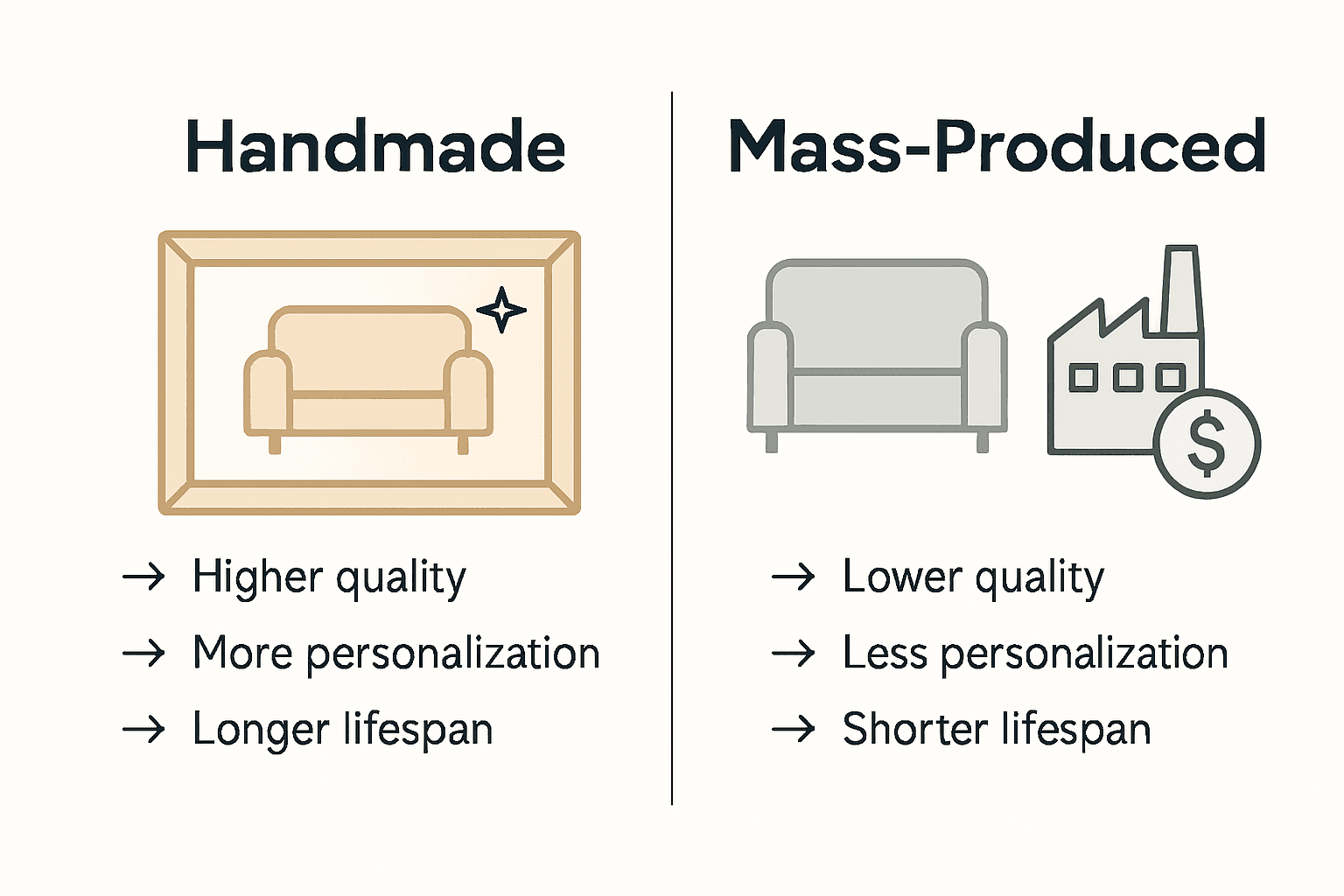
The distinction between handmade and mass-produced sofas represents far more than a simple manufacturing difference - it embodies a fundamental approach to furniture creation. UK handmade furniture traditions reveal profound differences in craftsmanship, durability, and long-term value that extend well beyond initial purchase price. Mass-produced sofas emerge from automated assembly lines, prioritising speed and cost-efficiency, while handmade sofas represent a deliberate commitment to quality and individual expression.
Structural integrity forms a critical point of differentiation. Mass-produced sofas typically utilise standardised materials and rapid production techniques that compromise long-term durability. Handmade sofas, by contrast, employ time-honoured construction methods where each joint is carefully assessed, each frame meticulously reinforced, and each material selected for its specific structural qualities. Artisan craftspeople spend hours ensuring precise wood joining, robust frame construction, and superior cushion support - elements frequently overlooked in factory-line manufacturing.
Economic value extends beyond immediate aesthetic appeal. While handmade sofas might initially appear more expensive, their superior construction translates into remarkable longevity. A well-crafted handmade sofa can endure decades of use, maintaining structural integrity and aesthetic charm far longer than mass-produced alternatives. The investment becomes more apparent over time, as cheaper manufactured sofas require frequent replacement, while handmade pieces become cherished family heirlooms that retain both functional utility and emotional significance.
Pro Tip for Value Assessment: When comparing sofa options, calculate the potential lifetime cost by considering durability, maintenance requirements, and replacement frequency, not just the initial purchase price. A slightly higher upfront investment in a handmade sofa can yield substantial long-term financial and aesthetic benefits.
To clarify the distinctions, here is a side-by-side comparison of handmade and mass-produced sofas:
| Aspect | Handmade Sofas | Mass-Produced Sofas |
|---|---|---|
| Craftsmanship | Skilled artisans, meticulous attention | Automated assembly lines |
| Material Quality | Premium, hand-selected materials | Standardised, cost-driven materials |
| Design Flexibility | Highly customisable and bespoke | Limited options, fixed designs |
| Durability | Engineered for decades of use | Shorter lifespan, prone to wear |
| Environmental Impact | Lower emissions, sustainable practices | Higher waste, larger carbon footprint |
| Long-Term Value | Greater longevity, heirloom potential | Requires replacement, less lasting |
Cost, Longevity, and Environmental Impact
Handmade sofas represent a sophisticated intersection of economic wisdom, sustainable design, and long-term value that transcends traditional furniture purchasing paradigms. UK handmade furniture traditions illuminate the profound economic and environmental considerations that distinguish artisan-crafted furniture from mass-produced alternatives. While initial investment might appear higher, the holistic value proposition of handmade sofas reveals a nuanced approach to responsible consumption.
Longevity forms the cornerstone of the handmade sofa’s economic argument. Meticulously constructed using superior materials and time-honoured techniques, these pieces are engineered to withstand decades of use, unlike disposable mass-manufactured furniture. Artisan craftspeople select premium hardwoods, employ robust joinery methods, and use high-density foam and resilient upholstery materials that resist wear and deterioration. This approach dramatically reduces replacement frequency, translating into significant long-term financial savings and reducing overall resource consumption.
Environmental sustainability emerges as another critical advantage of handmade furniture. Small-scale production minimises industrial waste, reduces carbon emissions associated with large-scale manufacturing, and typically utilises locally sourced materials. Many artisan workshops prioritise responsible timber sourcing, select eco-friendly fabrics, and implement production processes that generate minimal environmental impact. The result is furniture that not only serves functional purposes but also aligns with conscientious consumer values of environmental stewardship and ethical production.
Pro Tip for Sustainable Purchasing: When investing in a handmade sofa, request detailed information about material sourcing, production methods, and the manufacturer’s environmental commitments. Understanding these factors helps you make an informed decision that balances aesthetic preference, functional requirements, and ecological responsibility.
Discover the Perfect Handmade Sofa for Your Home Today
Choosing a handmade sofa means investing in superior comfort, timeless style, and personalised craftsmanship tailored to your exact needs. If you are seeking to elevate your living space with furniture that balances durability and bespoke design, Homeflair.com offers an exceptional range of handcrafted sofas made in the UK. Our extensive collection includes fabric and leather options designed by renowned brands such as Buoyant Upholstery and La-Z-Boy, providing flexibility to match your personal style and space requirements.
Experience the difference of genuine handmade quality with the convenience of browsing detailed product listings and secure checkout at Homeflair. Whether you want to customise your sofa or explore affordable ex-display options, now is the perfect moment to bring unmatched craftsmanship and enduring value into your home. Start your journey to comfort and style by visiting Homeflair.com and discover sofas that truly reflect your lifestyle.
Frequently Asked Questions
What defines a handmade sofa?
Handmade sofas are meticulously crafted pieces of furniture made by skilled artisans, focusing on individual component selection, design, and expert craftsmanship rather than mass production. Each piece is tailored to reflect personal style and functional needs.
How do handmade sofas compare to mass-produced sofas in terms of quality?
Handmade sofas generally offer superior quality due to the careful selection of materials and meticulous construction methods. Unlike mass-produced sofas that may prioritise speed and cost, handmade options are designed for durability and longevity, often retaining their appeal for decades.
Are handmade sofas customizable?
Yes, handmade sofas provide extensive customisation options. Clients can modify dimensions, upholstery materials, cushion firmness, and even structural designs to create a piece that meets their specific comfort and aesthetic preferences.
What materials are commonly used in handmade sofas?
Common materials in handmade sofas include premium woods like teak, rosewood, and oak for frames, as well as high-quality fabrics such as cotton, linen, and wool for upholstery. Each material offers unique benefits regarding durability, texture, and aesthetics.