

Most british homes feature unique layout challenges, from grand Victorian terraces to sleek modern flats. Designing a living space that feels both luxurious and expertly tailored starts with careful planning. If you want your bespoke sofa to perfectly reflect your taste and elevate your surroundings, every detail matters. Discover how precise measurements and thoughtful placement can make an immediate difference, creating a truly harmonious environment where comfort and beauty go hand in hand. Even premium homes can gain up to 30 percent more functional space simply by rethinking sofa arrangements.
Table of Contents
- Step 1: Assess Your Room Dimensions Precisely
- Step 2: Define Your Ideal Seating Zones Effectively
- Step 3: Select And Align Sofa Styles Strategically
- Step 4: Position Sofas For Optimal Flow And Comfort
- Step 5: Verify Arrangement For Symmetry And Access
Summary of Key Insights
| Insight | Explanation |
|---|---|
| 1. Measure Room Dimensions Carefully | Accurate measurements prevent choosing an oversized sofa that disrupts room harmony and flow. Always document dimensions and account for obstacles like windows and doors. |
| 2. Define Distinct Seating Zones | Creating intentional seating zones enhances functionality and encourages interaction. Use furniture arrangement and rugs to delineate spaces effectively. |
| 3. Choose Sofa Styles Based on Room Type | Selecting suitable sofa styles for your space ensures a cohesive look and comfort. Consider your lifestyle and architectural context when making choices. |
| 4. Position Sofas for Flow | Optimal sofa placement enhances movement within the room. Maintain appropriate distance from walls and other furniture to prevent overcrowding. |
| 5. Verify Symmetry in Arrangement | A balanced furniture layout is essential for aesthetic appeal and comfort. Ensure equitable spacing and unobstructed pathways for a harmonious design. |
Step 1: Assess your room dimensions precisely
Before selecting your dream sofa, understanding your room’s precise measurements is fundamental. Measuring your living space accurately ensures you choose a sofa that complements rather than overwhelms your interior. Precise dimensional assessments are critical for achieving a harmonious living environment.
Start by gathering essential tools: a reliable metal measuring tape, a notepad, and a pencil. Measure the length and width of your room from wall to wall, paying close attention to architectural features like alcoves, windows, and doorways. Document these measurements carefully, recording both the total room dimensions and specific obstacle locations. When measuring, remember to account for walking spaces and potential furniture arrangements. Pro tip specifically for UK homes: Victorian terrace rooms often have unique architectural quirks, so measure multiple points to ensure accuracy.
Document each measurement twice to confirm precision. Record ceiling height as well, which impacts how large or tall a sofa can comfortably sit within the space. Understanding these dimensions will prevent purchasing a sofa that feels cramped or disproportionate.
Expert Advice Always leave at least 70 to 90 centimetres of walking space around your sofa to maintain comfortable room flow and functionality.
Step 2: Define your ideal seating zones effectively
Creating purposeful seating zones transforms your living space from a mere room into an inviting, functional environment. Interior design zoning strategies help you craft intimate spaces that enhance how you live and interact within your home.
Begin by identifying the primary activities that will occur in your living area. Consider creating distinct zones for conversation, reading, entertainment, and relaxation. Use area rugs, strategic furniture placement, and lighting to delineate these spaces. For instance, a plush armchair positioned near a window can create a reading nook, while a larger sofa arrangement might define the main conversation area. Think about traffic flow and ensure each zone feels connected yet distinct.
Pay attention to how natural and artificial light interact with your proposed zones. Lighting can dramatically influence the mood and functionality of each space. A floor lamp beside a reading chair, soft ambient lighting for conversation areas, and focused task lighting can help define and enhance each zone’s purpose.
Expert Advice Use furniture placement and area rugs to create visual boundaries that make each seating zone feel intentional and cohesive.
Step 3: Select and align sofa styles strategically
Choosing the right sofa style can transform your living space from ordinary to extraordinary, creating a focal point that reflects your personal aesthetic and functional needs. Sofa configuration options play a crucial role in defining your room’s character and comfort.
Start by considering your lifestyle and room’s architectural context. Traditional Victorian terraced homes might benefit from classic Chesterfield or streamlined two seater sofas, while modern open plan spaces could accommodate modular or L shaped designs. Pay attention to proportions ensure the sofa complements rather than dominates your room. Consider factors like fabric texture, colour palette, and how the sofa’s lines interact with existing furniture and architectural features. A leather sofa with clean lines might suit a minimalist space, while a plush velvet corner sofa could create warmth in a larger room.
Think beyond aesthetic appeal and evaluate practical elements. Seat depth, arm height, and overall comfort matter as much as visual design. Test different styles in showrooms if possible, sitting and assessing how each design feels. Remember that a sofa is an investment piece that should serve both style and functional purposes.
Here is a summary of common sofa styles and their suitability for different room types:
| Sofa Style | Best For | Main Benefit |
|---|---|---|
| Chesterfield | Victorian terraces | Timeless elegance |
| Two-seater Sofa | Compact rooms | Space-saving design |
| Modular Sofa | Open plan areas | Flexible configurations |
| L-shaped Sofa | Large modern rooms | Defined seating zones |
| Corner Sofa | Family spaces | Maximum seating capacity |
Expert Advice Always visualise your sofa in the actual space by creating digital mockups or using painters tape to outline its potential placement before making a final purchase.
Step 4: Position sofas for optimal flow and comfort
Crafting the perfect sofa placement requires more than simply pushing furniture against walls. Sofa configuration techniques can transform your living space into a harmonious and inviting environment that encourages conversation and relaxation.
Consider your room’s natural pathways and architectural features when positioning your sofa. Aim to create a layout that allows smooth movement without obstructing walkways. Ideally, leave approximately 45 to 60 centimetres between the sofa and other furniture pieces for comfortable navigation. In smaller spaces, consider floating the sofa slightly away from walls to create an illusion of depth and prevent the room from feeling cramped. Angle sofas subtly to guide visual interest and create dynamic conversation areas that feel natural and intuitive.
Pay special attention to focal points like fireplaces, windows, or television units. Your sofa should complement these features without competing for attention. In open plan spaces, use the sofa as a natural room divider that defines different functional zones while maintaining an overall sense of cohesion. Experiment with different angles and positions until you find a configuration that feels both comfortable and visually appealing.
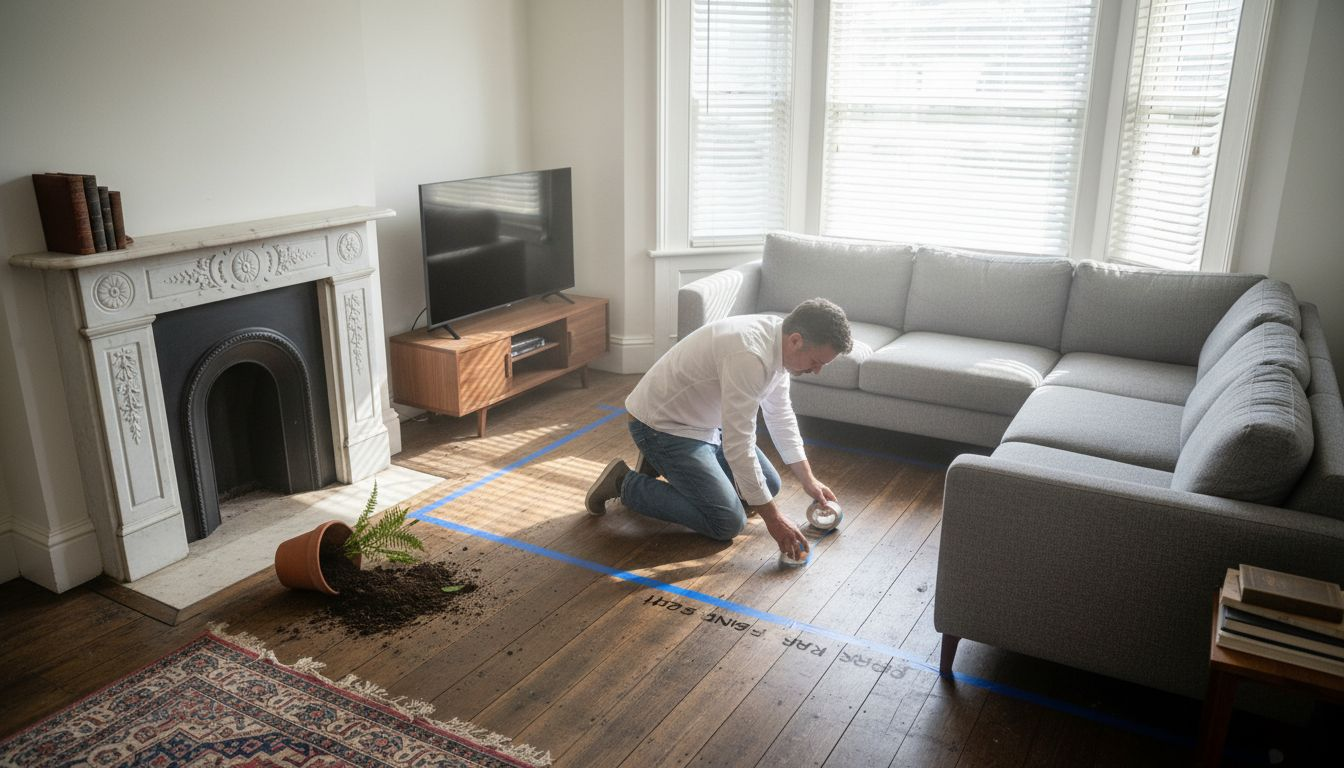
Expert Advice Use masking tape on the floor to outline your proposed sofa placement before moving heavy furniture, helping you visualise the potential layout without physical strain.
Step 5: Verify arrangement for symmetry and access
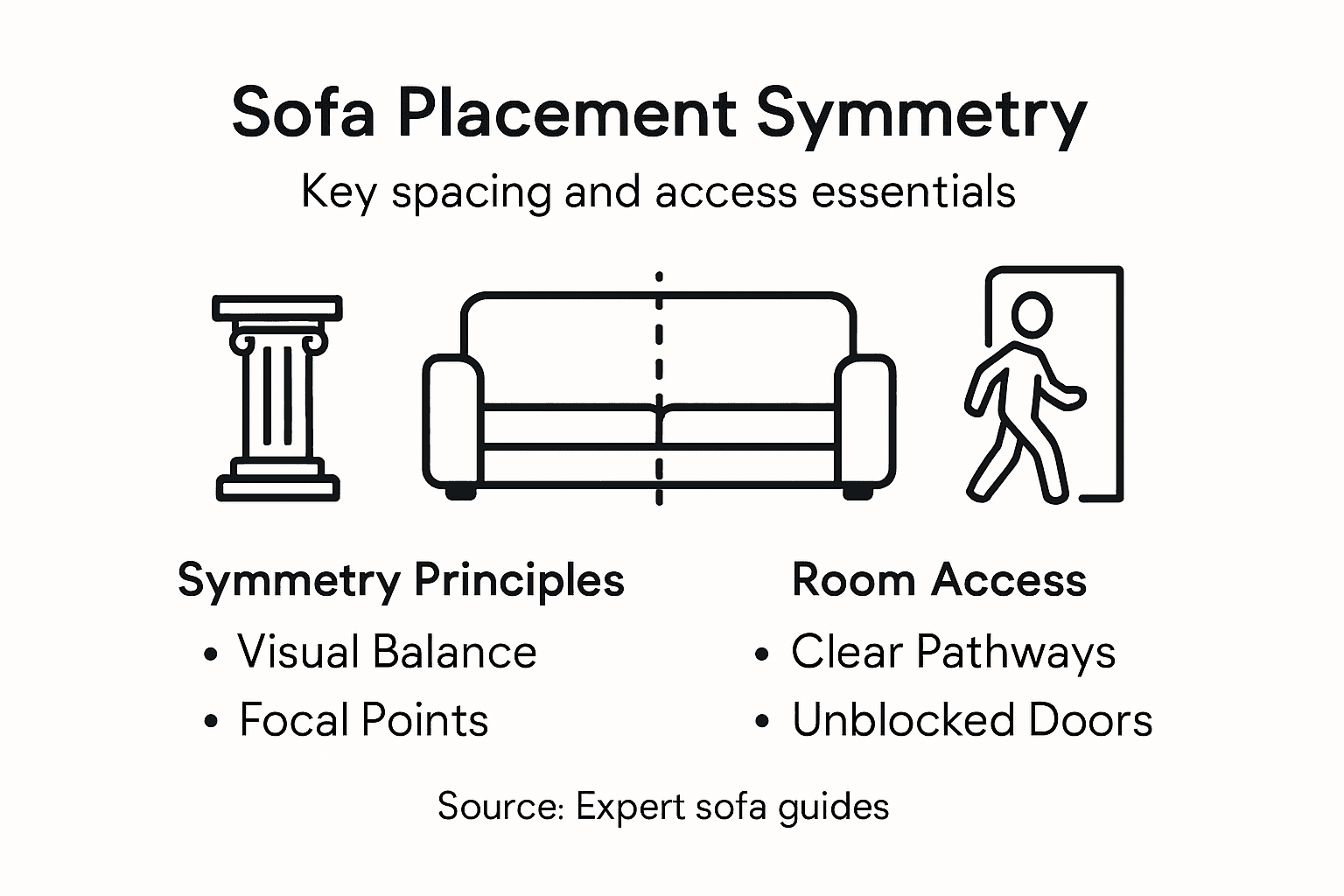
Achieving the perfect sofa layout goes beyond initial placement. Symmetry principles in design are crucial for creating a balanced and visually appealing living space that feels both comfortable and intentional.
Begin by stepping back and viewing your room from multiple angles. Check that your sofa placement creates a sense of visual equilibrium. Ensure there is proportional spacing between furniture pieces and that no single area feels overcrowded or empty. In rectangular rooms, consider positioning sofas to create a natural conversation area, with seating arranged to face or angle towards each other. Measure the distances between furniture to confirm at least 45 to 60 centimetres of walking space around each piece.
Pay close attention to how your sofa interacts with architectural features and room flow. Verify that doorways remain unobstructed and that movement through the space feels natural and unrestricted. Consider sightlines to key focal points like windows, fireplaces, or entertainment units. Your goal is to create a harmonious arrangement that feels both purposeful and intuitive, allowing each piece of furniture to complement the others without competing for attention.
A quick reference for recommended walking spaces and their impact on room functionality:
| Space Around Sofa | Suggested Distance | Effect on Room Flow |
|---|---|---|
| Minimum walking gap | 45 centimetres | Allows basic movement |
| Comfortable access | 70-90 centimetres | Enhances ease of navigation |
| Between furniture | 45-60 centimetres | Prevents overcrowding |
| Near doorways | At least 70 centimetres | Ensures unobstructed entry/exit |
Expert Advice Take digital photographs of your furniture layout and view them in black and white to more objectively assess balance and symmetry.
Discover the Perfect Sofa to Complement Your Living Space
Struggling to find a sofa that fits flawlessly within your carefully measured room and complements your thoughtfully designed seating zones? The challenge of selecting a sofa style that balances luxury, comfort, and the unique architectural details of your home can be overwhelming. Whether you are visualising a Chesterfield in a Victorian terrace or a modular sofa for an open plan living area, Homeflair.com offers solutions tailored to your needs.

Unlock your living room’s true potential by exploring a wide selection of bespoke sofas crafted right here in the UK. With quality brands like Buoyant Upholstery and La-Z-Boy, plus options to personalise fabrics or leather finishes, you can create a sofa that perfectly aligns with your style and spatial requirements. Act now to transform your space into a luxurious haven with skilful craftsmanship and expert design support. Begin your journey at Homeflair and find inspiration for your ideal sofa placement by browsing our exclusive collections and expertly crafted custom sofas.
Frequently Asked Questions
How do I measure my room for sofa placement?
To measure your room accurately, use a metal measuring tape to document the length and width from wall to wall. Make sure to account for architectural features and walkways, leaving at least 70 to 90 centimetres for comfortable movement around your sofa.
What are the key factors to consider when defining seating zones with my sofa?
When defining seating zones, consider the activities that will take place in your space, such as conversation and relaxation. Use area rugs and strategic furniture placement to visually separate these zones, enhancing the overall functionality of your living area.
How can I choose the right sofa style for my living space?
Selecting the right sofa style involves considering your lifestyle and the architectural context of your room. Assess factors such as fabric texture, colour palette, and the sofa’s lines, ensuring it complements your existing furniture and enhances the aesthetic appeal of your space.
What is the best way to position my sofa for optimal flow?
To achieve optimal flow, ensure there is a distance of 45 to 60 centimetres between your sofa and other furniture for comfortable navigation. Consider natural pathways and focal points in the room while positioning the sofa to create a relaxed and inviting atmosphere.
How do I check for symmetry in my sofa arrangement?
To check for symmetry, step back and view your room from different angles, ensuring that the spacing between furniture feels balanced. Measure distances to confirm at least 45 to 60 centimetres of walking space around each furniture piece to maintain harmony and functionality in the layout.
Should I use visual aids to help with my sofa placement?
Yes, using masking tape on the floor can help outline the proposed sofa placement without moving heavy furniture. This method allows you to visualise the layout and make adjustments easily before finalising the arrangement.