

Most british homes have embraced rattan furniture for its blend of natural beauty and surprising strength. With over 600 varieties available, rattan is more than a trendy design choice—its popularity has soared by nearly 40 percent in the UK over recent years. As interest grows, so do misconceptions about what rattan truly is and what it can offer. Staying informed about the facts versus the myths will help you make confident choices that fit your lifestyle and living space.
Table of Contents
- Rattan Furniture Defined and Common Myths
- Different Types of Rattan Materials Used
- Key Properties and Design Features Explained
- Caring for Rattan Indoors and Outdoors
- Comparing Rattan to Other Furniture Options
Key Takeaways
| Point | Details |
|---|---|
| Understanding Rattan Varieties | Rattan furniture comes in natural and synthetic varieties, each serving different environments with unique characteristics. Natural rattan is ideal for indoor use, while synthetic rattan excels outdoors due to its durability and weather resistance. |
| Importance of Material Selection | When choosing rattan furniture, consider weave density and frame material, as these factors influence durability and aesthetic appeal. High-quality synthetic options, like PE and PP, are particularly well-suited for outdoor settings. |
| Maintenance Needs Differ | Rattan furniture maintenance varies significantly between indoor and outdoor usage. Indoor natural rattan requires gentle cleaning and protection from sunlight, whereas outdoor synthetic rattan needs robust cleaning and protective measures against weather elements. |
| Comparative Advantages of Rattan | Rattan offers distinct advantages over traditional materials, including lightweight construction, intricate designs, and superior weather resistance. This versatility makes it a popular choice for both indoor and outdoor spaces. |
Rattan Furniture Defined and Common Myths
Rattan represents a fascinating category of furniture crafted from climbing palm species native to Southeast Asia. These remarkable plants offer extraordinary versatility, with approximately 600 distinct species used in furniture manufacturing. Rattan is not just a material, but a testament to natural engineering that transforms flexible plant stems into durable, stylish furnishings.
Contrary to popular misconception, rattan furniture comes in two primary varieties: natural and synthetic. Natural rattan, harvested directly from palm stems, provides an authentic, organic aesthetic best suited for indoor environments. Synthetic rattan, engineered to withstand outdoor conditions, represents a modern innovation that addresses traditional limitations. This breakthrough allows homeowners to enjoy the elegant look of rattan without compromising on durability or weather resistance.
Understanding rattan requires dispelling several persistent myths. Many people mistakenly believe rattan is fragile or unsuitable for serious furniture applications. In reality, high-quality rattan furniture can be incredibly robust, especially when crafted using advanced manufacturing techniques. Synthetic rattan, in particular, offers remarkable resilience against moisture, UV radiation, and temperature fluctuations. The material’s inherent flexibility allows designers to create intricate, curved shapes that traditional wood furniture cannot easily replicate.
When selecting rattan furniture, discerning buyers should consider key characteristics like weave density, frame material, and intended usage environment. While natural rattan excels in controlled indoor settings, synthetic variants provide exceptional performance for patios, gardens, and outdoor living spaces. The evolution of rattan from a traditional craft to a contemporary design solution demonstrates how natural materials can be reimagined through innovative engineering.
Different Types of Rattan Materials Used
Rattan furniture encompasses a diverse range of materials, each offering unique characteristics and performance attributes. Natural and synthetic varieties represent the primary categories of rattan materials used in modern furniture design. Natural rattan, harvested from palm stems, provides an authentic, organic aesthetic that appeals to traditionalists and design purists.
Synthetic rattan materials have revolutionised outdoor furniture manufacturing. Synthetic options like PE (polyethylene), PVC, PU, and PP offer remarkable durability and weather resistance. Polyethylene (PE) and polypropylene (PP) stand out as the most advanced synthetic materials, closely mimicking natural rattan’s visual texture while providing superior performance in challenging environmental conditions.

Each rattan material type presents distinct advantages. Natural rattan excels in indoor settings, offering a classic, handcrafted appearance that brings warmth to interior spaces. Synthetic variants, particularly PE and PP, deliver exceptional outdoor resilience, resisting UV damage, moisture, and temperature fluctuations. These modern materials enable furniture designers to create intricate woven patterns that maintain structural integrity even under extreme weather conditions.
When selecting rattan furniture, understanding material properties becomes crucial. Natural rattan requires careful maintenance and protection from direct sunlight and moisture, making it ideal for controlled indoor environments. Synthetic rattan, by contrast, offers low-maintenance solutions for patios, gardens, and outdoor living spaces. The ongoing innovation in synthetic materials continues to blur the line between traditional craftsmanship and modern engineering, providing consumers with increasingly sophisticated furniture options that combine aesthetic appeal with practical durability.
Key Properties and Design Features Explained
Rattan furniture represents a sophisticated blend of artisan craftsmanship and contemporary engineering, distinguished by several critical design features. Weave density and structural integrity emerge as primary considerations for discerning furniture enthusiasts. The intricate weaving patterns not only contribute to aesthetic appeal but also determine the overall durability and strength of the piece.
The structural composition of rattan furniture typically involves a complex interplay between the core frame material and the exterior weave. Aluminium frames provide lightweight strength, while powder-coated steel offers enhanced durability for outdoor applications. These underlying structural elements create a robust foundation that supports the delicate, intricate rattan weaving technique, ensuring longevity and resistance to environmental stressors.
Ergonomic design plays a crucial role in modern rattan furniture manufacturing. Contemporary pieces prioritise comfort through carefully calculated curves, supportive contours, and strategic cushioning. The flexibility of synthetic rattan materials allows designers to create seamless, flowing shapes that conform to natural body mechanics. This approach transforms rattan from a mere decorative material into a sophisticated seating solution that balances visual elegance with practical comfort.
Furthermore, rattan furniture’s design features extend beyond mere aesthetics. Advanced manufacturing techniques now incorporate modular designs, enabling homeowners to reconfigure seating arrangements with remarkable ease. Weather-resistant treatments, UV-stabilised synthetic materials, and innovative weaving techniques have revolutionised how we perceive and utilise outdoor furniture. The result is a product category that seamlessly integrates style, functionality, and adaptability across various living environments.
Caring for Rattan Indoors and Outdoors
Maintaining rattan furniture requires a nuanced approach that varies significantly between indoor and outdoor environments. Cleaning techniques and preservation methods differ dramatically based on the furniture’s material composition and exposure to environmental elements. Indoor natural rattan demands gentle care, while synthetic outdoor variants require more robust maintenance strategies.
Indoor rattan furniture thrives with minimal intervention. Regular dusting using a soft brush or microfibre cloth prevents dirt accumulation in intricate weave patterns. Avoid saturating the material with water, instead using slightly dampened cloths for occasional deeper cleaning. Protect indoor rattan pieces from direct sunlight and extreme humidity, as prolonged exposure can cause structural weakening and aesthetic deterioration.
Outdoor synthetic rattan demands a more proactive maintenance approach. Periodic cleaning with mild soap solutions helps remove accumulated dirt, pollen, and environmental debris. Protective covers become essential during extended periods of non-use, shielding furniture from harsh weather conditions. UV-resistant treatments can be applied to synthetic materials to prevent colour fading and structural degradation, extending the furniture’s operational lifespan.
Seasonal care represents a critical aspect of rattan furniture preservation. During winter months, synthetic outdoor pieces should be stored in dry, temperature-controlled environments to prevent potential moisture damage. Indoor pieces benefit from occasional conditioning treatments that maintain the material’s flexibility and prevent brittleness. By implementing these targeted care strategies, homeowners can ensure their rattan furniture remains aesthetically pleasing and structurally sound for many years, bridging the gap between functional utility and design elegance.
Comparing Rattan to Other Furniture Options
Rattan furniture distinguishes itself from traditional furniture materials through its unique combination of aesthetic versatility and structural adaptability. Lightweight construction and intricate weaving techniques set rattan apart from conventional wooden or metal furniture options, offering a distinctive approach to interior and exterior design that transcends standard manufacturing methods.
Modern rattan furniture collections demonstrate remarkable flexibility compared to traditional furniture materials, providing homeowners with innovative solutions that blend style and functionality. Where wooden furniture remains rigid and metal pieces often feel cold and uninviting, rattan offers a warm, organic aesthetic that seamlessly adapts to various design contexts. Synthetic rattan, in particular, outperforms traditional materials by providing superior weather resistance, lightweight manoeuvrability, and exceptional durability across different environmental conditions.
Compared to timber furniture, rattan presents several distinct advantages. Its intricate weaving allows for more complex, sculptural designs that traditional woodworking techniques cannot easily replicate. While wooden furniture requires extensive maintenance and remains vulnerable to moisture damage, synthetic rattan withstands environmental challenges with remarkable resilience. The material’s inherent flexibility enables designers to create curved, ergonomic shapes that wooden constructions struggle to achieve, resulting in more comfortable and visually dynamic seating arrangements.
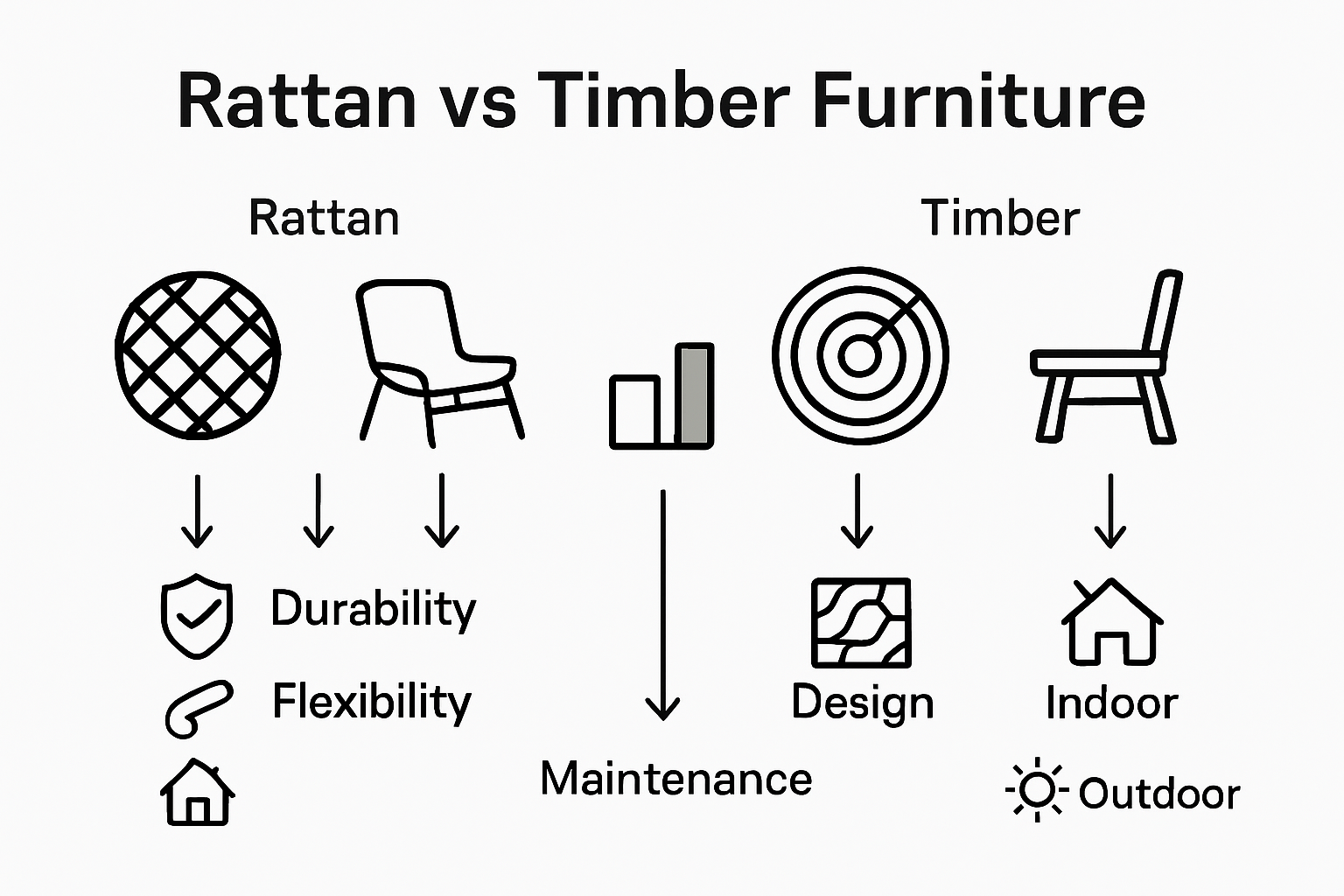
Ultimately, rattan represents a sophisticated alternative to conventional furniture materials. Its ability to bridge indoor and outdoor living spaces, combined with its lightweight yet robust construction, positions it as a superior choice for contemporary design enthusiasts. From modular sofas to intricate dining sets, rattan offers unparalleled versatility that traditional furniture materials cannot match, making it an increasingly popular option for discerning homeowners seeking both aesthetic appeal and practical functionality.
Discover the Perfect Rattan Furniture for Your Home Today
Choosing the right rattan furniture means balancing style, durability and comfort in your living or outdoor spaces. Whether you want the authentic charm of natural rattan for indoors or the resilient, weatherproof qualities of synthetic varieties outdoors, understanding material differences and care tips is essential to making the best choice. At Homeflair, we understand these challenges and offer an exclusive collection of premium rattan furniture designed to meet your needs.

Explore our range where quality craftsmanship meets modern design on Homeflair. Enjoy detailed product descriptions, transparent pricing and easy online purchasing with secure payment options. For effortless browsing and quick delivery, start transforming your living or garden with stylish, ergonomic rattan pieces today. Don’t wait to bring elegance and comfort into your space – visit Homeflair.com now and find your ideal rattan furniture solution.
Frequently Asked Questions
What is rattan furniture made from?
Rattan furniture is crafted from climbing palm species mainly found in Southeast Asia. It can be made from two primary types: natural rattan, which is harvested directly from palm stems, and synthetic rattan, which is engineered for durability.
How should I care for indoor rattan furniture?
Indoor rattan furniture requires gentle cleaning, ideally by dusting regularly with a soft brush or microfibre cloth. Use a slightly damp cloth for deeper cleaning and avoid direct sunlight and excessive humidity to prevent damage.
What are the advantages of synthetic rattan over natural rattan?
Synthetic rattan offers superior weather resistance, durability, and low maintenance compared to natural rattan. It is designed to withstand environmental elements, making it ideal for outdoor use without compromising on aesthetic appeal.
Can rattan furniture be used outdoors?
Yes, synthetic rattan is specifically designed for outdoor use, providing exceptional performance against moisture, UV radiation, and temperature changes. Natural rattan is better suited for indoor environments due to its sensitivity to the elements.