

Over 60 percent of British homeowners admit they have bought furniture that ultimately did not fit their space. Selecting the perfect pieces is about more than style or trends. Understanding how every centimetre contributes to comfort and function can save you time, money, and frustration. With a focus on practical tips drawn from both modern and classic British design guidelines, this guide will show you how to get it right from the start.
Table of Contents
- Stage 1: Assess Your Space And Requirements
- Stage 2: Measure For A Perfect Fit
- Stage 3: Select Materials And Styles For Durability
- Stage 4: Match Furniture With Your Décor
- Stage 5: Verify Quality And Comfort Before Buying
Quick Summary
| Essential Insight | Explanation |
|---|---|
| 1. Measure your space accurately | Document the dimensions of rooms, including heights and architectural features, to ensure furniture fits seamlessly. |
| 2. Evaluate lifestyle needs | Consider how you use each room to guide furniture selection; multipurpose pieces may be necessary for different lifestyles. |
| 3. Test materials for durability | Choose robust materials suited to each room’s demands, ensuring they withstand wear and maintain their appearance over time. |
| 4. Ensure comfort before purchasing | Physically test furniture to assess comfort and support, checking how it feels during real-life use to avoid future discomfort. |
| 5. Visualise with layout tools | Use sketches or digital tools to plan furniture placement and colour schemes, helping prevent costly design mistakes. |
Stage 1: Assess your space and requirements
Stepping into the world of furniture selection begins with understanding your living space. Before buying any pieces, you need a strategic approach that considers every square metre of your home. The Parker Morris Committee’s pioneering housing design guidelines emphasised functional space planning decades ago, and those principles still ring true today.
Start by measuring your rooms precisely. Grab a laser measurer or a traditional tape measure and document the dimensions of each space. Note not just floor area, but also ceiling height, window placements, doorway locations, and any architectural features like alcoves or built-in shelving. These details matter immensely when selecting furniture that fits seamlessly. Pay attention to walkways and ensure you leave enough room for comfortable movement. The standard recommendation is keeping at least 75 centimetres of clear walking space between furniture pieces.
Consider your lifestyle and specific requirements. A bustling family home needs different furniture solutions compared to a minimalist professional’s flat. Architectural practice guidelines suggest evaluating functional and ergonomic requirements before making purchases. Think about how you use each room do you need multipurpose furniture? Will you host dinner parties? Do you work from home? These questions will help refine your furniture selection strategy.
Pro tip: Create a rough room layout sketch. Use graph paper or digital planning tools to visualise furniture placement before buying. This simple step can save you from costly mistakes and ensure your new furniture looks and functions perfectly in your space.
Stage 2: Measure for a perfect fit
Measuring furniture is more than just a numbers game it is about creating harmony in your living space. UK furniture placement standards emphasise the critical importance of precise measurements to ensure structural compatibility and seamless integration.

Start with a systematic approach. Measure the width, depth, and height of each potential furniture piece, but also critically measure doorways, staircases, and hallways through which the furniture must pass. Many people forget to account for awkward turns or narrow corridors which can turn furniture delivery into a logistical nightmare. Pro tip use a flexible measuring tape for accuracy and always measure at multiple points to account for any slight variations in room dimensions.
Consider not just the furniture dimensions, but also the surrounding space. Leave enough room for movement approximately 75 centimetres between furniture pieces and walls. This ensures comfortable navigation and prevents your room from feeling cramped. Take into account radiators, electrical outlets, and windows which might impact furniture placement. If you are purchasing a larger piece like a sofa or dining table, create paper templates matching its exact dimensions and lay these on your floor to visualise the actual space it will occupy.
Warning: Always measure twice and purchase once. A few centimetres can make the difference between a perfect fit and a furniture disaster that does not work in your space.
Stage 3: Select materials and styles for durability
Choosing furniture materials is about striking a perfect balance between aesthetic appeal and long lasting performance. Advanced computational design research reveals sophisticated approaches to understanding how materials interact with human comfort and structural integrity.
Consider the specific demands of each room when selecting materials. Living rooms and high traffic areas require robust fabrics and finishes that can withstand daily wear and tear. Leather and tightly woven textiles like microfibre offer excellent durability and are relatively simple to maintain. For wooden furniture, hardwoods such as oak and maple provide superior longevity compared to softer woods. Architectural design guidelines emphasise selecting materials that meet user needs while ensuring aesthetic and functional requirements.
Think beyond initial appearance and consider how materials age. Some fabrics and finishes develop a beautiful patina over time, while others deteriorate quickly. Wool upholstery might look luxurious but can be challenging in homes with pets or children. Synthetic materials often provide better resistance to stains and wear. Always request fabric samples and test them against your lifestyle demands.
Pro tip: When evaluating furniture, perform the stretch and recovery test. Gently pull the fabric or material and observe how quickly it returns to its original shape. This simple test can reveal much about the potential durability of your chosen piece.
Stage 4: Match furniture with your décor
Creating a harmonious interior design is about understanding how different furniture pieces communicate with each other and your existing space. Architectural design practices emphasise selecting furniture that complements the overall aesthetic and functional requirements of your home.
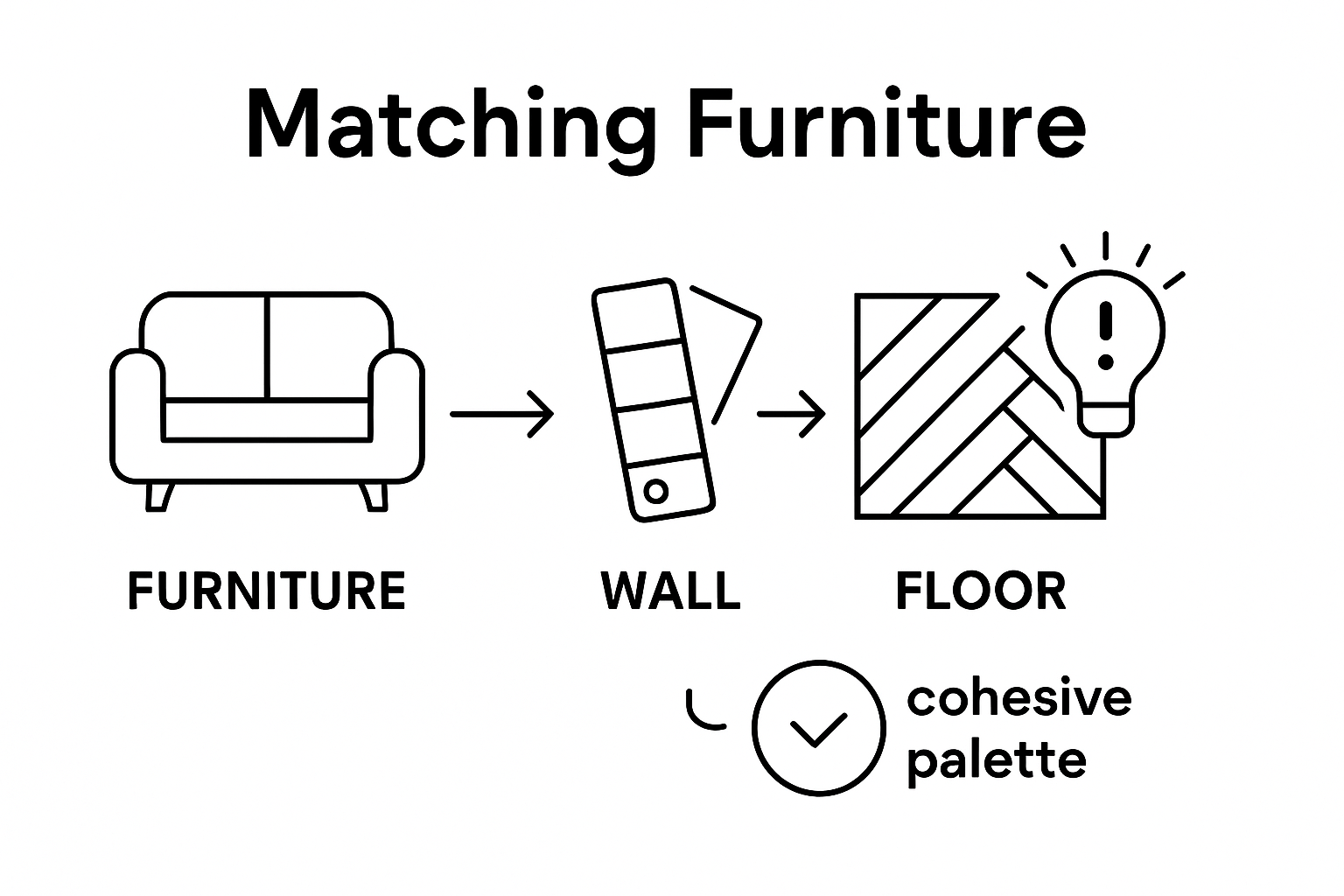
Start by establishing a cohesive colour palette. Look at your existing walls, flooring, and architectural features to determine a base tone. If your room features neutral shades, you can introduce bolder furniture pieces as statement elements. Conversely, in spaces with vibrant wall colours, opt for more understated furniture that provides balance. Consider the Chester Club Modular Sofa as an example of how a versatile piece can anchor a room’s design while providing flexibility.
Texture plays a crucial role in creating depth and visual interest. Mix different materials thoughtfully combining smooth leather with rough woven textiles or sleek metal accents with soft upholstered surfaces. Pay attention to proportions ensure larger furniture pieces do not overwhelm smaller spaces. A good rule of thumb is to leave about 30 percent of your floor space open to maintain a sense of spaciousness.
Pro tip: Take photographs of your room and use digital design tools to experiment with furniture placement and colour combinations before making final purchases. This approach helps visualise the potential outcome and prevents costly design mistakes.
Stage 5: Verify quality and comfort before buying
Advanced ergonomic research demonstrates that selecting furniture is not just about appearance but understanding how pieces interact with your body and living space. Comfort goes far beyond initial impressions and requires careful assessment.
Architectural design guidelines emphasise the importance of functional flexibility when evaluating furniture quality. Start by physically testing each piece sit on sofas and chairs for at least five minutes. Check how your body feels notice pressure points and overall support. Look for furniture with robust frame construction hardwood frames offer superior durability compared to softwood or particleboard alternatives. Inspect upholstery seams cushion resilience and ensure zippers and attachments feel secure.
Consider long term usage patterns when assessing comfort. A chair might feel pleasant for a few moments but challenge your posture during extended periods. Test furniture as you would actually use it in real life working sitting reading or relaxing. Pay attention to seat depth back support and armrest positioning. Some furniture stores offer trial periods which can be invaluable for thorough evaluation.
Pro tip: Bring a friend when furniture shopping. A second perspective can help identify potential comfort issues you might overlook and provide honest feedback about how a piece truly feels.
Discover Perfect Furniture Solutions for Your Stylish UK Home
Choosing furniture that fits your space, matches your style, and offers lasting comfort can feel overwhelming. This article highlighted essential challenges like precise space measurement, selecting durable materials, and ensuring ergonomic comfort — all crucial to avoid costly mistakes and create harmonious interiors. At Homeflair, we understand these needs deeply and offer a curated collection designed to help you navigate these decisions with confidence.

Explore high-quality sofas, chairs, and bespoke pieces crafted to complement your décor while providing superior durability and comfort. With detailed product listings, real customer reviews, and easy measurement guides, you can visualise how each piece fits your unique space. Don’t wait to transform your home with style and function expertly combined. Start your seamless shopping experience now at Homeflair and bring your vision to life.
Frequently Asked Questions
How can I assess my space before choosing furniture?
Start by accurately measuring each room, including floor area, ceiling height, and the locations of windows and doors. Document these dimensions and create a rough layout sketch to visualise where your furniture will fit, ensuring you leave at least 75 centimetres of clear movement space.
What should I consider when measuring furniture for my home?
When measuring furniture, consider its width, depth, and height while also accounting for the size of doorways and hallways for delivery. Measure twice to ensure a perfect fit and use templates matching the dimensions of larger pieces to visualise how they will occupy your space.
How do I choose the right materials for my furniture?
Select materials based on the demands of each room; for high-traffic areas like the living room, choose durable fabrics like leather or tightly woven textiles. Perform a stretch and recovery test on materials to assess durability, and consider how they will age over time in your environment.
How can I match furniture with my existing décor?
Start by establishing a cohesive colour palette that complements your walls and flooring, balancing bold furniture with neutral spaces or vice versa. Use digital design tools to experiment with furniture placement and textures, ensuring your selections work harmoniously together.
What should I test for comfort before buying furniture?
Before finalising your purchase, physically test each piece by sitting on it for a minimum of five minutes to gauge comfort and support. Pay attention to elements like seat depth and back support; bring a friend to provide honest feedback about how the furniture feels during real-life activities.