

Choosing a bespoke sofa for your British home is more than a style decision. With the average British household investing over £2,000 in high quality seating, it is clear that durability and craftsmanship matter. When every element from upholstery to frame construction impacts both elegance and longevity, affluent homeowners want pieces that elevate their living spaces. Here, you will find expert considerations for selecting a stunning and resilient sofa that complements your unique taste and enhances any British home.
Table of Contents
- Step 1: Define Your Style And Space Requirements
- Step 2: Assess Frame And Construction Techniques
- Step 3: Evaluate Upholstery Quality And Materials
- Step 4: Inspect Cushioning And Seat Support
- Step 5: Verify Craftsmanship And Brand Reputation
Quick Summary
| Key Point | Explanation |
|---|---|
| 1. Measure your room accurately | Precise measurements ensure the chosen sofa fits well in your space and maintains balance with existing furniture. |
| 2. Prioritise solid frame construction | Opt for hardwood frames for durability, as cheaper materials lead to quicker deterioration and discomfort. |
| 3. Evaluate upholstery materials carefully | Select high-quality fabrics or leathers for longevity and comfort; examine details for signs of superior craftsmanship. |
| 4. Check cushioning and seat support | Test cushions for responsiveness to maintain shape and comfort; well-constructed cushions provide lasting support. |
| 5. Research brand reputation thoroughly | Investigate the manufacturer’s history and customer feedback to ensure quality and reliable after-sales service. |
Step 1: Define your style and space requirements
Defining your sofa style and spatial requirements is the foundation of selecting the perfect living room centrepiece. Understanding your room’s layout and your personal aesthetic preferences will help you make an informed choice that transforms your living space.
Begin by measuring your room meticulously. Precise room measurements are crucial for determining the ideal sofa dimensions. Consider factors like wall space, walking paths, and existing furniture placement. A standard British living room typically ranges between 3.5 to 4.5 metres in length, which means you need to calculate sofa width carefully to maintain comfortable movement and visual balance.
Reflect on your lifestyle and functional needs. Are you seeking a compact two-seater for a small flat or a spacious corner sofa for family gatherings? Consider your seating requirements, room traffic patterns, and how the sofa will integrate with your existing decor. Think about colour schemes, fabric durability, and whether you prefer modern minimalist designs or classic upholstered styles that reflect traditional British interiors.
Pro tip: Always leave at least 80 centimetres of walking space around your sofa to ensure comfortable navigation and a sense of spaciousness in your living area.
Step 2: Assess frame and construction techniques
Understanding the underlying structure of a sofa is crucial to determining its long term durability and comfort. Your sofa’s frame serves as the fundamental support system that will dictate how well it performs over years of use.
Traditional hardwood frame construction represents the gold standard for quality sofas. Look for frames crafted from kiln dried hardwoods like beech or oak, which are mortised and tenoned for superior structural integrity. These techniques ensure joints are tightly connected and resistant to warping or splitting. Cheaper sofas often use particleboard or softwood frames that deteriorate quickly, so prioritise solid hardwood construction.
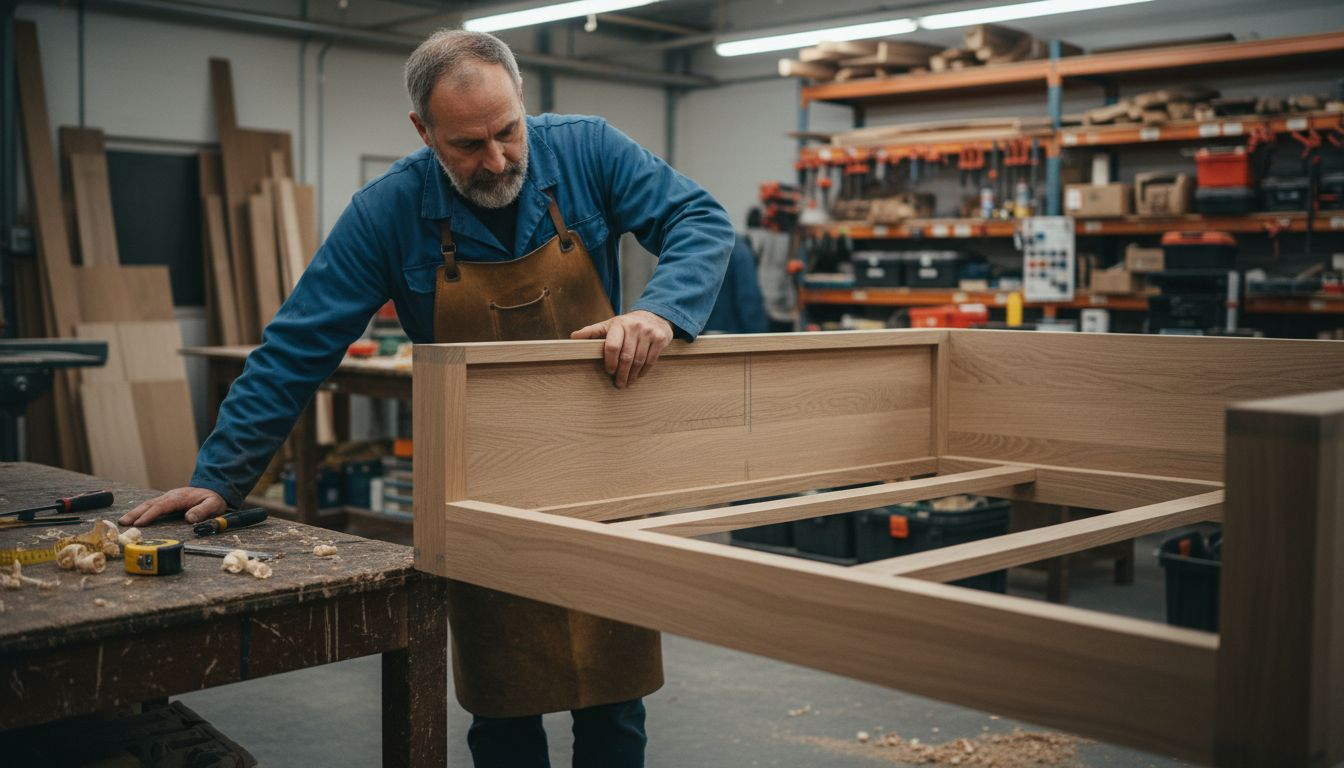
Here is a summary of common sofa frame materials and their main advantages:
| Frame Material | Durability Level | Typical Cost |
|---|---|---|
| Kiln-dried hardwood | Extremely durable | Higher investment |
| Softwood | Moderate durability | Lower cost |
| Particleboard | Low durability | Very affordable |
| Metal | Highly durable if quality | Mid to high range |
Examine the internal support systems carefully. High quality sofas feature eight way hand tied coil springs stitched directly to webbing, providing consistent cushioning and preventing sagging. Multiple layers of padding over these springs create a luxurious seating experience. When testing a sofa, sit in different positions and feel how the frame responds. A robust frame should feel solid without excessive creaking or flexing, indicating superior craftsmanship and potential longevity.
Pro tip: Gently lift one corner of the sofa frame during testing if possible a well-constructed piece should feel substantial and balanced without wobbling or feeling lightweight.
Step 3: Evaluate upholstery quality and materials
Choosing the right upholstery is about balancing aesthetic appeal with practical durability. Your sofa’s fabric or leather will define both its visual character and its ability to withstand daily use.
Premium upholstery craftsmanship represents the pinnacle of sofa quality. Look for materials that demonstrate meticulous attention to detail such as hand-studding, carefully matched pattern alignments, and precise tailoring. Natural fabrics like pure wool or high-grade leather offer superior longevity compared to synthetic alternatives. Consider factors like thread count, weave density, and surface treatment that contribute to a fabric’s resistance to wear and tear.
Examine the upholstery closely for signs of quality. High end sofas will feature multiple textile layers, precise seam work, and consistent colour saturation. For leather sofas, assess the grain quality and suppleness. Full grain leather develops a beautiful patina over time and demonstrates superior manufacturing. Synthetic or lower grade materials often appear uniform and lack the subtle variations that indicate authentic craftsmanship.
Compare upholstered fabric and leather sofas by key performance features:
| Feature | Fabric Upholstery | Leather Upholstery |
|---|---|---|
| Comfort | Soft and warm touch | Becomes supple with use |
| Maintenance | May stain, needs cleaning | Wipes clean, needs conditioning |
| Appearance ageing | May fade over time | Develops rich natural patina |
| Price Range | Broad (budget to premium) | Typically mid to high end |
Pro tip: Always request fabric samples and test them at home under realistic lighting to understand how colours and textures truly appear in your living space.
Step 4: Inspect cushioning and seat support
Cushioning represents the heart of your sofa’s comfort and long term performance. Understanding how to evaluate seat support will ensure you select a piece that maintains its shape and comfort for years to come.
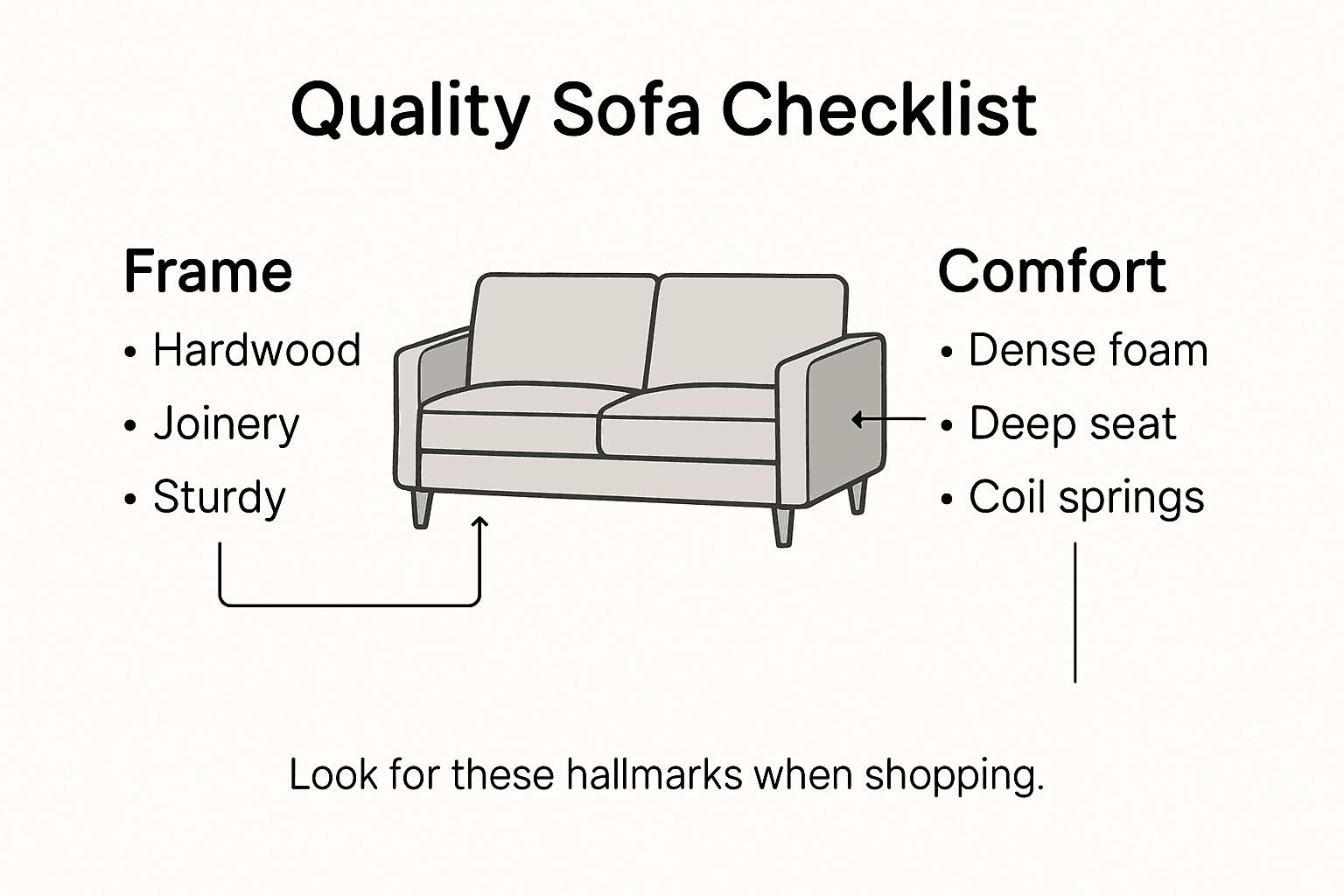
Quality cushioning combines multiple layers of materials strategically designed to provide both comfort and structural integrity. Look for high density foam cores wrapped in soft down or polyester fibrefill that prevent immediate flattening. The best sofas feature cushions with sewn box edges that maintain their shape and resist shifting. When testing, press down on the cushions and observe how quickly they regain their original form. Premium cushions should spring back immediately without significant indentation.
Examine the seat deck underneath the cushions for additional support. Webbing or eight way hand tied springs indicate superior construction that distributes weight evenly and prevents sagging. Cheaper sofas often use basic webbing or minimal padding that deteriorates quickly. Sit on the sofa and shift your weight to assess how stable and supportive the seating area feels. A high quality sofa will feel consistent across its entire surface without noticeable weak points or areas of excessive compression.
Pro tip: Bring a small measuring tape when sofa shopping to check cushion depth and ensure it matches your comfort preferences and body proportions.
Step 5: Verify craftsmanship and brand reputation
Understanding a sofa manufacturer’s reputation is crucial in making an informed purchasing decision. Your goal is to identify brands that consistently deliver superior quality and stand behind their products with robust warranties and customer support.
UK sofa brands with exceptional craftsmanship represent a blend of heritage and modern manufacturing excellence. Research the brand’s history, looking for manufacturers with generations of upholstery experience. Examine their production processes particularly those highlighting British manufacturing traditions. Look for brands that provide transparent information about their materials sourcing, construction techniques, and quality control standards. Reputable manufacturers often showcase detailed information about their design philosophy and commitment to durability.
Beyond brand reputation, investigate customer reviews and independent assessments. Check for consistent positive feedback regarding longevity, comfort, and after sales service. Established brands typically offer comprehensive warranties that reflect their confidence in product quality. Pay attention to details like frame construction guarantees, fabric durability promises, and the manufacturer’s approach to potential repairs or replacements. A truly exceptional sofa brand will demonstrate transparency and stand behind their craftsmanship with meaningful customer support.
Pro tip: Request manufacturer documentation about material sourcing and construction techniques to gain deeper insights into the sofa’s potential long term performance.
Discover Lasting Comfort and Style with Homeflair Sofas
Choosing a sofa that combines durability, craftsmanship, and timeless design can feel overwhelming. This article highlights key factors such as frame construction, upholstery quality, and cushioning that help you spot sofas built to last. At Homeflair, we understand your desire for a perfect living room centrepiece that not only looks stunning but supports your lifestyle comfortably for years to come.

Explore our curated collection of bespoke fabric and leather sofas from renowned British makers like Buoyant Upholstery and La-Z-Boy. Whether you seek exquisite handcrafted frames or premium upholstery options, Homeflair offers transparent product details and a streamlined shopping experience that empowers confident decisions. Start your journey to a stylish and comfortable living space today by visiting Homeflair.com and browse sofas that meet the highest standards of quality and design. Your ideal sofa is waiting to transform your home now.
Frequently Asked Questions
How can I determine the right size for my sofa?
To determine the right size for your sofa, measure your living room and consider factors such as wall space, walking paths, and existing furniture. Ensure you leave at least 80 centimetres of walking space around the sofa to maintain comfortable navigation.
What frame materials should I look for in a quality sofa?
Look for frames made from kiln-dried hardwood, such as beech or oak, as they offer superior durability compared to softwood or particleboard. Prioritise solid hardwood construction for long-lasting support and stability.
How do I evaluate the upholstery quality of a sofa?
Evaluate upholstery quality by checking for consistent weave density, thread count, and the presence of multiple textile layers. Request fabric samples and test them at home to see how colours and textures appear in your living space.
What features indicate quality cushioning in a sofa?
Quality cushioning features high-density foam cores wrapped in soft down or polyester fibrefill. When testing a sofa, press down on the cushions and observe how quickly they spring back; premium cushions should recover immediately without significant indentation.
How can I assess the craftsmanship of a sofa?
Assess the craftsmanship by examining the brand’s reputation and customer reviews. Look for manufacturers that provide detailed information about their materials sourcing, construction techniques, and offer meaningful warranties that reflect their product quality.
What should I do if I am unsure about my comfort preferences for a sofa?
If you are unsure about your comfort preferences, visit showrooms to test various sofa styles and cushion depths. Bring a small measuring tape to check cushion depth and ensure it meets your comfort needs and body proportions.