

Finding a british sofa that truly suits your home can be surprisingly complex. With over 60 percent of british homeowners prioritising durability and style in their living room upgrades, the right choice of fabric or leather makes all the difference. Navigating the world of bespoke sofas means weighing comfort, maintenance, and visual harmony, so understanding your options gives you the confidence to invest in a piece that elevates both everyday living and your home’s personality.
Table of Contents
- Step 1: Assess Your Living Space Needs
- Step 2: Explore Fabric And Leather Options
- Step 3: Compare Durability And Maintenance
- Step 4: Match Materials With Your Lifestyle
- Step 5: Verify Quality And Authenticity
- Step 6: Finalise Your Sofa Material Choice
Quick Summary
| Key Insight | Explanation |
|---|---|
| 1. Assess your living space needs | Evaluate room dimensions, layout, and function to identify the ideal sofa size and style. |
| 2. Choose the right materials | Select upholstery that fits your lifestyle, balancing aesthetics with durability and maintenance. |
| 3. Understand maintenance requirements | Different materials require varied cleaning efforts; choose based on your available time and effort. |
| 4. Verify quality and authenticity | Check manufacturer documentation and safety labels to ensure your sofa meets quality standards. |
| 5. Finalise material choices carefully | Review all options and consider professional advice to ensure your final selection meets all your needs. |
Step 1: Assess your living space needs
Choosing a bespoke sofa starts with a thoughtful evaluation of your living space. Understanding how your room functions and the specific requirements of your home will guide you towards selecting the perfect sofa configuration and material.
Begin by measuring your room precisely, noting architectural features like windows, doorways, and existing furniture placement. The goal is to determine not just available space, but how people move and interact within the area. Design experts recommend considering room dimensions, traffic patterns, and intended furniture use to create a harmonious living environment. Analyse your lifestyle needs too. Do you frequently entertain guests? Need a sofa for family movie nights? Require extra seating for a home office? These considerations will influence your sofa selection.
Think beyond physical measurements. Consider the room’s natural lighting, colour scheme, and overall aesthetic. A bespoke sofa should complement your existing decor while providing functional comfort. Visualise how different sofa styles and materials might integrate with your current interior design.
Expert Tip: Create a scaled floor plan using masking tape to outline potential sofa dimensions before making a final decision, helping you visualise the actual space impact.
Step 2: Explore fabric and leather options
Selecting the right upholstery is crucial in creating a bespoke sofa that reflects your personal style and meets your practical needs. British upholstery experts offer thousands of fabric and leather samples, ensuring you can find the perfect material for your living space.
Start by understanding the characteristics of different materials. Leather provides durability and a timeless elegance, with options ranging from smooth top-grain to textured full-grain finishes. Fabric offers incredible versatility, with choices spanning delicate natural fibres like cotton and linen to robust synthetic blends that resist wear and staining. Consider your lifestyle when choosing materials. Households with children or pets might prefer performance fabrics with enhanced stain resistance, while those seeking luxury might opt for premium leather or delicate natural textiles.

Evaluate each material’s practical attributes. Leather tends to be easier to clean and develops a beautiful patina over time, whereas fabrics provide more colour and pattern options. Some materials offer better temperature regulation leather can feel cool in winter and warm in summer, while wool fabrics provide natural insulation.
Expert Tip: Always request fabric and leather samples to view in your actual home lighting and alongside existing furniture before making a final selection.
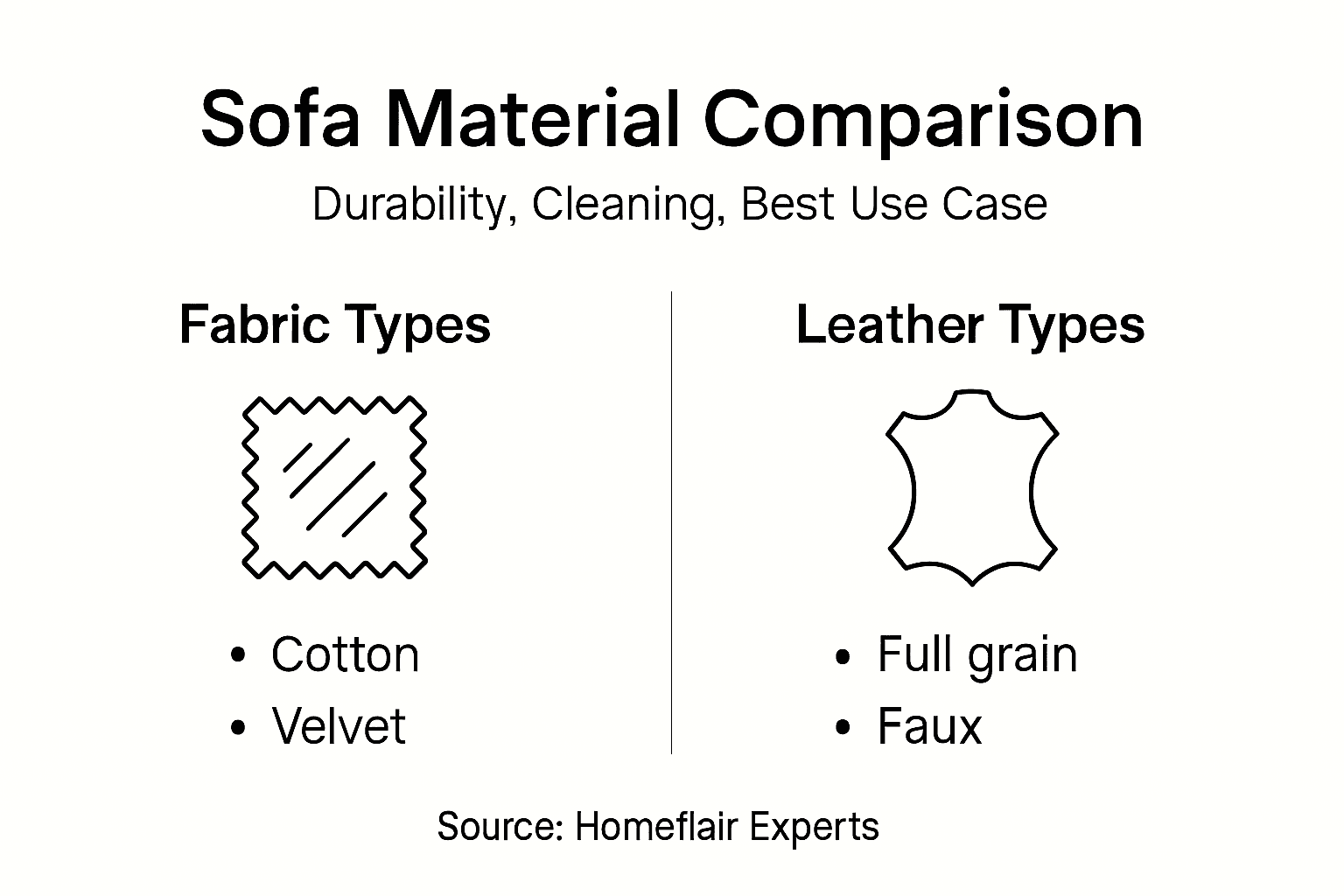
Here is a comparison of common sofa upholstery materials to aid your decision:
| Material | Key Advantages | Potential Drawbacks | Ideal Use Case |
|---|---|---|---|
| Leather | Durable, easy to clean | Can scratch, sensitive to sun | Luxury & high-traffic homes |
| Cotton | Breathable, natural feel | Prone to staining, less robust | Light use, classic interiors |
| Wool | Warm, resists pilling | May require special cleaning | Cosy, traditional settings |
| Synthetic Blends | Highly stain resistant | Can feel less natural | Families, pet owners |
| Linen | Elegant appearance, cool touch | Wrinkles easily, less durable | Occasional use, formal rooms |
Step 3: Compare durability and maintenance
Understanding the longevity and care requirements of different sofa materials is crucial for making an informed decision. UK safety regulations provide essential insights into material performance and durability standards that can guide your selection process.
Leather and fabric materials each present unique maintenance considerations. Leather typically requires periodic conditioning to prevent cracking and maintain its suppleness. High quality leather can last decades with proper care, developing a rich patina that enhances its appearance. Fabric upholstery demands more frequent cleaning and may be more susceptible to staining and wear. Performance fabrics with stain resistant treatments offer enhanced durability, making them ideal for households with children or pets.
Consider the environmental factors in your home. Sunlight exposure can fade and degrade certain materials more quickly, with leather and dark fabrics being particularly vulnerable. Some materials resist wear better than others. Synthetic blends often provide superior durability compared to pure natural fibres, offering better resistance to stretching, staining, and general wear and tear.
Expert Tip: Request durability test reports from manufacturers and compare their independent material performance ratings before making your final selection.
Step 4: Match materials with your lifestyle
Sustainable furniture choices require careful consideration of your daily living patterns and specific household needs. Understanding how different materials interact with your lifestyle is crucial in selecting a bespoke sofa that remains both functional and beautiful for years to come.
Consider your household composition and typical usage patterns. Active families with children and pets might prioritise performance fabrics with stain resistant treatments and high durability. Households with fewer physical demands could explore more delicate materials like pure wool or lightweight linens. Your sofa material should withstand your specific environmental conditions including sunlight exposure, potential moisture, and frequency of use.
Take into account practical maintenance requirements that align with your available time and cleaning preferences. Some materials require more frequent professional cleaning or specialised care, while others can be maintained with simple weekly vacuuming and occasional spot treatments. Leather might need periodic conditioning, whereas synthetic blends offer more straightforward maintenance. Your lifestyle rhythm should dictate the material complexity you are willing to manage.
Expert Tip: Create a detailed list of your household activities and potential sofa usage scenarios before making your final material selection.
Review these criteria when matching sofa material with your lifestyle:
| Criteria | Significance | Recommended Material Examples |
|---|---|---|
| Children or Pets | Needs durability | Synthetic blends, performance fabric |
| Formal Occasions | Prioritises elegance | Leather, linen, premium wool |
| Low Maintenance | Simple cleaning | Leather, certain synthetics |
| Sunlit Rooms | Fade resistance vital | Wool blends, treated synthetics |
Step 5: Verify quality and authenticity
UK fire safety regulations provide crucial guidance for verifying the quality and authenticity of bespoke sofas. Understanding how to assess material credentials is essential for making an informed purchasing decision.
Start by examining the manufacturer’s documentation and fire safety labels. These labels offer detailed insights into the materials used, production standards, and compliance with British safety regulations. Look for clear information about the sofa’s construction, including details about frame materials, upholstery composition, and manufacturing origin. Authentic bespoke sofas will have transparent documentation that demonstrates their craftsmanship and quality standards.
Seek additional verification through multiple channels. Request detailed material certificates, ask about the specific sourcing of fabrics or leather, and inquire about the craftspeople involved in the sofa’s production. Reputable manufacturers will be happy to provide comprehensive information about their manufacturing processes, material quality, and product provenance. Pay attention to details like stitching precision, material consistency, and the overall finish of the sofa.
Expert Tip: Always request a comprehensive materials report and request to inspect the sofa in natural lighting to verify its true quality and authenticity.
Step 6: Finalise your sofa material choice
UK safety standards provide a critical framework for making your final sofa material selection. Your comprehensive research and personal assessments now converge into this pivotal decision moment.
Review all your collected information with a critical eye. Compare the material samples you have gathered side by side, considering how each option performs against your original lifestyle requirements. Assess the fabric or leather under different lighting conditions and consider how the material will integrate with your existing interior design. Weight the practical aspects such as maintenance needs, durability, and comfort against the aesthetic appeal of each material option.
Consult with professional upholstery experts if you feel uncertain. Many bespoke sofa manufacturers offer personalised consultation services that can provide nuanced insights into material selection. They can help you understand subtle differences between materials, recommend options based on your specific requirements, and potentially suggest combinations or alternatives you might not have considered.
Expert Tip: Take photographs of your material samples in your actual living space to help visualise the final result and make a more informed decision.
Discover Your Perfect Bespoke Sofa at Homeflair
Selecting the ideal sofa material can be overwhelming when balancing durability, aesthetics and lifestyle needs. This guide highlights common challenges like finding a fabric or leather that withstands daily wear while reflecting your unique taste and home environment. Issues such as maintenance demands, sunlight exposure and family dynamics often complicate the decision. At Homeflair, we understand these pain points and offer an extensive range of bespoke sofas crafted by leading UK artisans, ensuring you achieve the durability and style you desire.
Explore our carefully curated selection of fabric and leather sofas designed to match various lifestyles and preferences. Whether you seek the timeless elegance of high-quality leather or the versatility of performance fabrics, you can easily customise your sofa to fit your living space. Act now to transform your home with a sofa that blends craftsmanship, comfort and longevity. Visit Homeflair.com and start your personalised sofa journey today. See why homeowners and interior designers trust Homeflair’s bespoke collection for quality, design and seamless ordering.
Frequently Asked Questions
How do I assess my living space for a bespoke sofa?
Begin by measuring your room accurately, considering dimensions, traffic patterns, and existing furniture placement. Visualise how different configurations will fit by creating a scaled floor plan to help you decide.
What upholstery materials should I consider for my bespoke sofa?
Evaluate your lifestyle needs and preferences by considering materials like leather for durability, or performance fabrics for stain resistance. Request fabric and leather samples to see how each option fits with your decor before making a choice.
How do I determine the durability of different sofa materials?
Assess each material’s maintenance requirements and longevity based on your household’s usage patterns. Request durability test reports from suppliers to compare material performance ratings before finalising your selection.
What practical factors should I consider when matching sofa materials with my lifestyle?
Consider factors such as the presence of children or pets, maintenance preferences, and environmental conditions like sunlight exposure. Create a list of your household activities to help identify material options that align with your daily life.
How can I verify the quality and authenticity of a bespoke sofa?
Examine the manufacturer’s documentation and fire safety labels for insights on material quality and compliance with safety standards. Always request a comprehensive materials report and inspect the sofa in natural lighting to validate its true appearance and quality.
What steps should I follow to finalise my sofa material choice?
Review all gathered information critically, comparing material samples against your lifestyle requirements. Consult with upholstery professionals for personalised recommendations to ensure your final selection is both functional and aesthetically pleasing.