

A good leather sofa can look better at ten years old than it did on delivery day. It softens, takes on a gentle sheen where hands rest and settles into the room. The leather sofas that end up cracked and faded are almost always the ones that were cleaned with the wrong thing or parked next to a radiator. The care itself is simple. Here is the routine we give customers, and the short list of things to avoid.
First, know which kind of leather you have
Leather sofas are finished in different ways, and the finish decides how much care it needs.
- Protected (pigmented) leather has a colour coat and a protective top layer. It resists spills and fading best and is the easiest to live with. Most family leather sofas are this type.
- Semi-aniline has a lighter protective coat, so it feels softer and shows more natural grain, with a little less resistance to marks.
- Aniline is dyed right through with little or no top coat. It is the most natural-looking and the most absorbent, so it marks and fades more easily.
Also check the specification for where the leather is. Some ranges use leather everywhere; others use real leather on the seats, backs and arms with a matching material on the outer sides and rear. Our Belgravia recliner, for example, states genuine leather on the seats, backs and arms and leather match on the outer sides and rear. That matters for cleaning, so if you are not sure what you have, ask us or the maker before using any product.
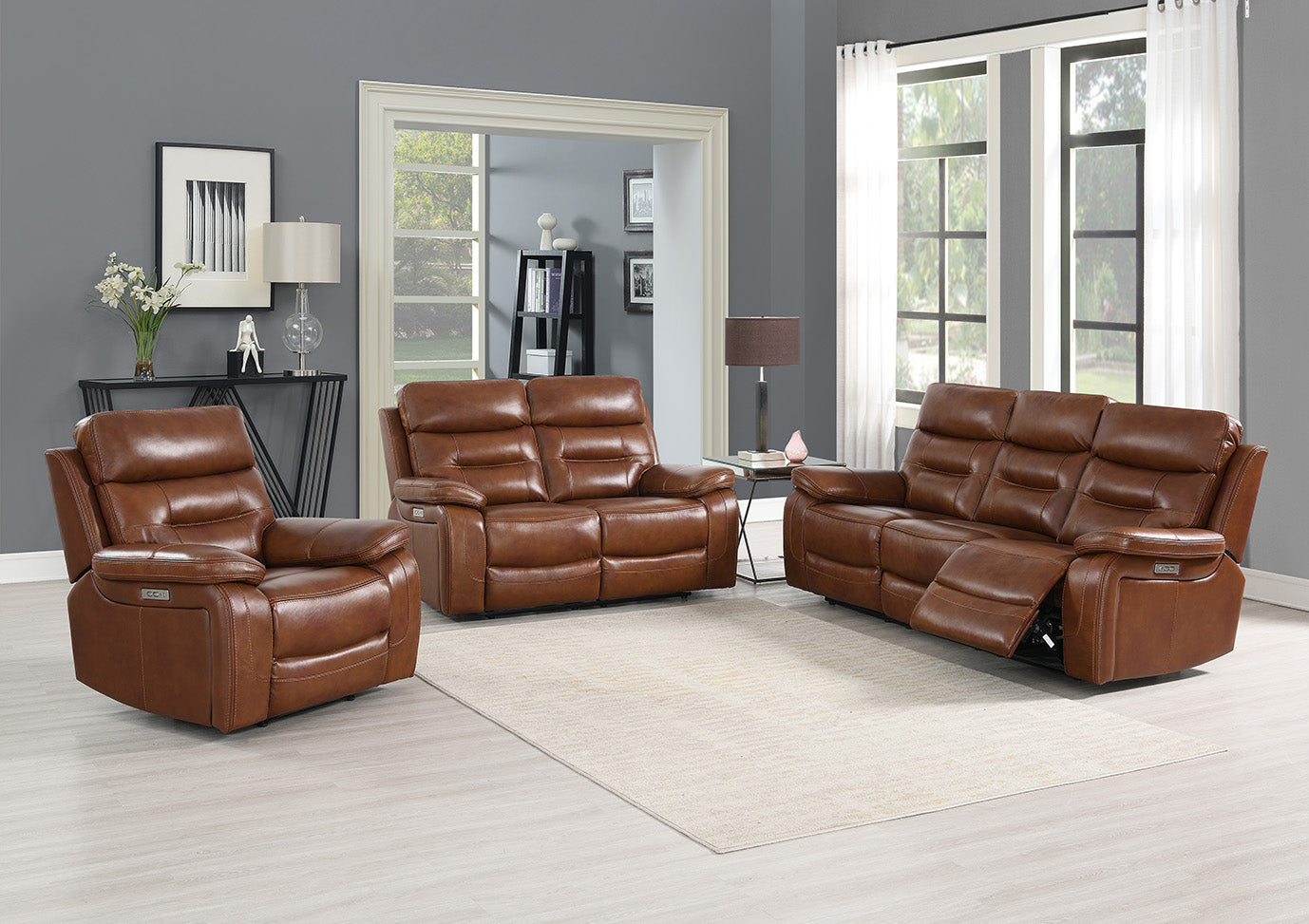
The Belgravia: pocket sprung, electric reclining, with genuine leather on every surface you sit on.
The routine
| How often | What to do | Why |
|---|---|---|
| Weekly | Dust with a soft, dry microfibre cloth; vacuum the creases with a soft brush attachment | Grit in the seams acts like sandpaper on the surface |
| As it happens | Blot spills straight away with a clean, dry cloth. Do not rub | Rubbing spreads liquid and pushes it into the grain |
| Monthly | Wipe over with a cloth barely dampened with clean water, then dry | Lifts body oils from arms and headrests before they build up |
| Every 6 to 12 months | Clean and condition with a product made for your leather type | Keeps the leather supple so it does not dry and crack |
Before you use any cleaner or conditioner for the first time, test it on a hidden area, such as the back of a seat cushion or the lower rear, and leave it to dry fully. If the colour or finish changes, do not use it.
What never to use on leather
- Household sprays and all-purpose cleaners. They strip the finish.
- Baby wipes and make-up wipes. They feel gentle, but many contain alcohol or detergents that dry leather out over time.
- Furniture polish, oils, saddle soap or wax not made for upholstery leather. They can leave a sticky film or darken the colour.
- Hairdryers to dry a wet patch. Let it dry naturally at room temperature.
- Soaking. Use a damp cloth, never a wet one.
Where you put the sofa matters as much as cleaning it
Heat and sunlight do more damage to leather than anything spilled on it. Keep the sofa away from radiators, fires and heaters, because direct heat dries the hide and leads to cracking. Strong sunlight through a south-facing window will fade any leather over time, aniline most quickly. If you cannot move the sofa, a throw over the most exposed area through summer is enough. Use our Will it Fit guide to plan placement before delivery, not after.
Common marks and what to do
Water rings: on protected leather they usually fade as the area dries. Dampen the whole panel evenly with a barely damp cloth so it dries to one even shade.
Grease or food: blot off what you can with a dry cloth. Do not add water to grease. A leather cleaner suitable for your leather type is the next step.
Ink and dye transfer: new jeans can rub blue dye onto pale leather. Act early with a cleaner made for leather; older dye marks are much harder to shift.
Scratches from pets: light surface scratches on semi-aniline and aniline can often be warmed and buffed out with your fingertip. Deeper marks on protected leather need a colour repair kit. If you have a dog or cat, our guide to sofa fabrics for pets and kids compares leather with the toughest fabrics.
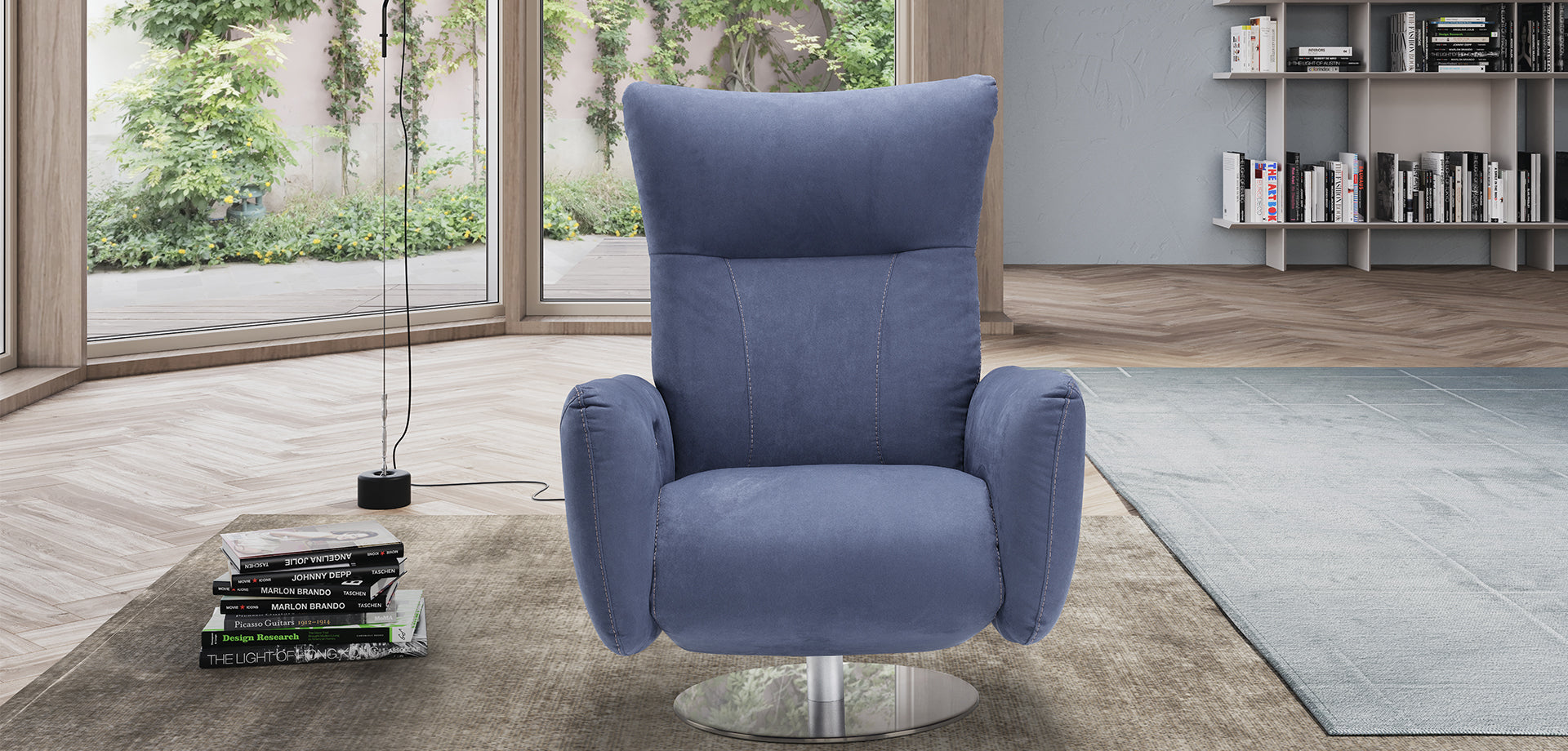
The Plage Italian leather swivel chair. Arms and headrests are the areas that benefit most from a monthly damp wipe.
Leather sofa questions, answered
How often should I condition a leather sofa?
Every six to twelve months suits most homes. Rooms with central heating on all winter, or sofas in sunny spots, sit at the more frequent end.
Is leather a good choice with children?
Protected leather is one of the most practical coverings there is: most spills wipe off if you catch them quickly, and crumbs do not work their way in.
Does leather feel cold in winter?
It feels cool for the first moment, then warms to body temperature quickly. Keeping the room at a steady temperature and the sofa away from radiators helps it stay comfortable and supple.
Which leather should I choose for a busy home?
Protected leather in a mid-tone. Browse our leather sofas, including Italian ranges from Newtrend Concepts Italia, and ask us which finish each one uses.
Feel the leathers for yourself
Italian and British-made leather sofas on the floor at Parkgate, Rotherham, with free parking. Ask us which finish each range uses. Free UK mainland delivery on every sofa.
Shop leather sofasSee leather corner sofasAlso read: Electric vs manual recliner sofas · Leather recliner sofas · Leather chairs